 Ultimate guide
Are Basement Window Well Covers Worth It?
Last Updated: November 12, 2026
Quick Summary
Installing window well covers delivers fast benefits: less water, less debris, fewer pests, and a safer well. A properly fitted cover deflects rain and snow so water never pools against your basement window and foundation, while also keeping out leaves and blocking pests.
- A cover that seals the well tight with no drainage path can trap water and make things worse.
- Clear polycarbonate is the default recommendation for most basements because it keeps natural light.
- Measure the well opening at its widest point so the cover overlaps the rim by at least an inch.
- Egress-rated covers must open from the inside without tools when the window is a required escape.
- A cover costs far less than repairing a rotted window frame or a wet basement wall.
Table of Contents
- Are Window Well Covers Necessary for Every Basement?
- The Core Benefits of Installing a Basement Window Well Cover
- Fall Prevention, Security, and Insulation: The Overlooked Wins
- Cover Types and Materials: What Actually Holds Up
- How to Install Window Well Covers Without Creating Drainage Problems
- Custom Window Well Covers Cost: What Drives the Price
- Egress, Building Codes, and Maintenance: What to Check Before You Buy
- Schedule a Window Well Inspection With Lone Eagle Home Services
- Frequently Asked Questions
Are Window Well Covers Necessary for Every Basement?
Not every basement needs a cover, but most do.
A window well is the curved metal or concrete pit that lets light into a below-grade basement window. It sits below grade, so anything that rolls, blows, or drains toward the house ends up in it. Leaves pile up, rain runs in, and snowmelt refills it. A cover changes that.
Open wells tend to fill with debris and hold moisture against the foundation, while covered wells stay drier and cleaner. The cover is not a luxury. It is maintenance prevention.
Below, we'll show you what a cover protects, which materials hold up, how to install one without trapping water, and what drives the price.
The Core Benefits of Installing a Basement Window Well Cover
The biggest benefit is water control. A cover keeps rain and snowmelt out of the well so water never pools against your basement window and foundation.
Stopping Water Intrusion and Basement Water Damage
Water in a window well is water against your foundation. An uncovered well gives runoff from the roof and yard a direct path to the window frame and the wall below grade.
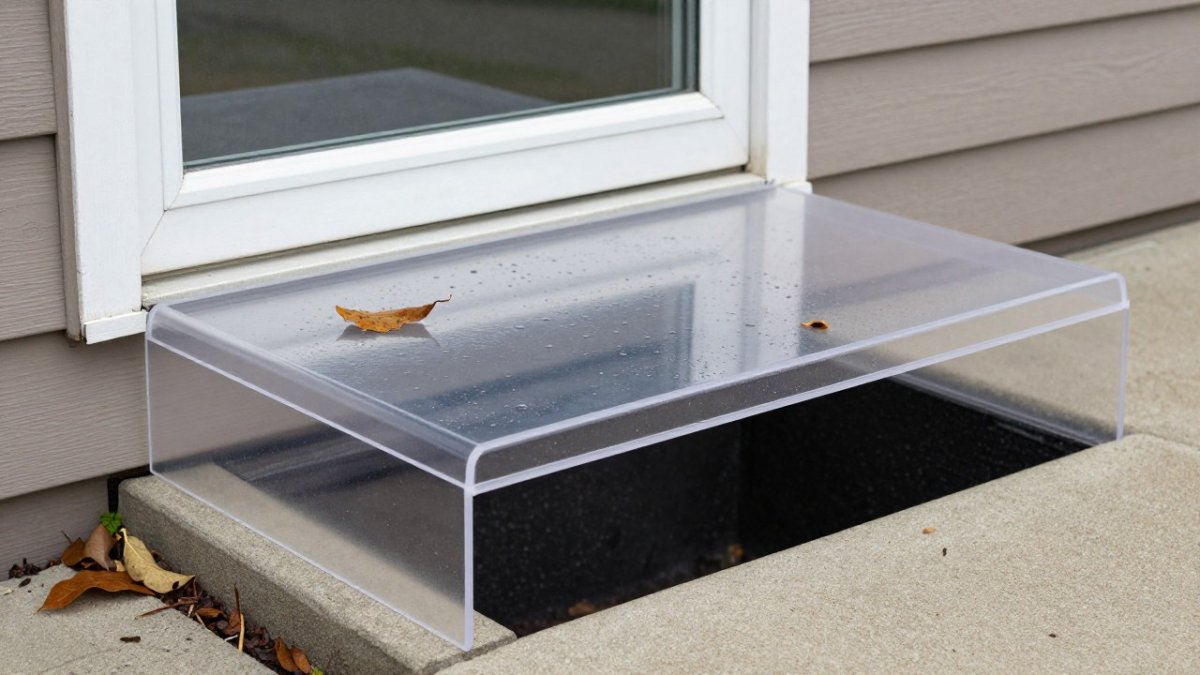
A properly fitted cover deflects rain and snow off the well entirely. What still gets in, a little splash and condensation, drains through the gravel at the bottom or the window-well drain.
Watch out: a cover that seals the well tight with no drainage path can make things worse by trapping water underneath. If you already fight moisture in the lower level, our guide to preventing water damage in your home basement walks through a room-by-room defense plan, and if your sump runs hard during storms, these sump pump battery backup systems keep it running when the power drops. For questions about whether a leak is covered, this breakdown of homeowners insurance and water damage from leaks explains what typically gets paid and what does not.
Keeping Out Leaves, Debris, and Pests
Debris is the quiet problem. Leaves, dirt, and twigs collect in an open well, hold moisture, and slowly clog the drain at the bottom. Once that drain clogs, the well becomes a bucket.
Covers stop most of it. A solid or grated cover keeps leaves, debris, and dirt from blowing in, which means less raking, fewer clogged drains, and less rot against the window frame. It also closes off an easy entry point for mice, insects, and the occasional raccoon.
Fall Prevention, Security, and Insulation: The Overlooked Wins
A cover is a safety device as much as a moisture barrier. An open well is a hole in the ground next to your house, and a fall into one can mean a serious injury.
This matters most for child safety and home safety in general. A load-rated cover that locks down turns an open pit into a flat, secure surface, and it adds basement security by blocking a low window that would otherwise be easy to reach.
Insulation is the benefit people forget. A clear cover traps a pocket of air over the window, slowing heat loss in winter and keeping cold air from pooling against the glass. It is not a substitute for proper insulation, but it is a free assist.
Cover Types and Materials: What Actually Holds Up
Material choice decides how long a cover lasts, how much light reaches the window, and what you will spend.
| Cover Type | Best For | Trade-Off |
|---|---|---|
| Clear polycarbonate | Light and visibility, most homes | Can scratch; needs occasional cleaning |
| Flat acrylic | Clean look on shallow wells | Less impact resistance than polycarbonate |
| Metal grate | Strength and ventilation | Lets small debris through; less insulation |
| Sloped metal | Heavy snow and rain shedding | Blocks some natural light |
| Reinforced or egress-rated cover | Basement bedrooms and required escape windows | Higher cost; must be specified and installed correctly |
Clear polycarbonate is the default recommendation for most basements. It keeps natural light and visibility, handles weather well, and resists impact better than acrylic.
Flat acrylic looks clean on shallow wells and costs less than polycarbonate, but it is more brittle.
Metal grates win on durability and ventilation. They let air move through the well, which helps with condensation, and they stand up to impact.
Sloped metal covers shed snow and rainwater best because the pitch moves water away from the window.
Durability comes down to thickness, UV resistance, and how the cover attaches. A thin cover that flexes under snow will crack within a few seasons.
Homeowners often buy on price and then replace the cover within a few winters.
If you would rather have the fit and installation handled by a professional team, our home maintenance team serving Morris County can assess your wells, windows, and doors together and recommend what actually fits.
How to Install Window Well Covers Without Creating Drainage Problems
The installation itself is simple. Getting the fit, anchoring, and drainage right separates a cover that works from one that causes a flooded basement.
- Measure the window-well dimensions at the widest point, including the rim, so the cover overlaps the well edge by at least an inch on every side. Measure the well opening, not the window, and note any curve or taper.
- Clear the well of leaves, debris, and dirt, and confirm the window-well drain or gravel bed is open. Pour a bucket of water into the well and watch how fast it drains; standing water after several minutes means the drain or gravel is clogged.
- Check the grade around the well. Soil should slope away from the house, not toward the well. If the ground settles toward the well, regrade before covering.
- Set the cover so it slopes slightly away from the window, letting rainwater and snowmelt run off the front rather than pooling against the glass.
- Secure it with the manufacturer's anchors or brackets so wind cannot lift it. On exposed sides of the house, add fasteners at the corners and along the windward edge, and confirm the anchors bite into solid material, not loose soil.
- Test with a hose. Water should run off the cover, not pool in the well. Check the edges for gaps where water can sneak under.
Watch out: anchoring a cover to a well that already holds water just hides the problem. Fix the drainage first, then cover.
Fit and anchoring details that matter. A cover should overlap the well rim, not sit inside it, so runoff sheds past the opening. On curved or irregular wells, a universal cover leaves crescent-shaped gaps that catch debris and channel water.
Drainage is not the cover's job. A cover keeps rain and snowmelt out, but it does not replace a functioning window-well drain, proper grading, or waterproofing on the foundation wall.
Maintenance and lifespan. Clear leaves off the top, rinse off dirt so light comes through, and check the anchors and drain a couple of times a year.
Custom Window Well Covers Cost: What Drives the Price
Custom window well covers generally cost more than off-the-shelf covers, and the gap is worth understanding before you buy. Price depends on size, material, thickness, and how custom the fit needs to be.
The main cost drivers:
- Size and shape. Standard rectangular wells cost less than curved or oversized wells.
- Material and thickness. Polycarbonate and heavier gauges cost more than thin acrylic.
- Custom fit. A cover cut to your exact window-well dimensions costs more than a universal size.
- Hardware. Locking anchors and reinforced brackets add to the price.
- Installation. Doing it yourself saves labor; professional installation adds cost but gets the fit and drainage right.
Cover prices vary by well and material. For current pricing on our membership plans, see our plans page. The honest math: a cover costs far less than repairing a rotted window frame or a wet basement wall.
Egress, Building Codes, and Maintenance: What to Check Before You Buy
Emergency egress is the one rule that overrides everything else. If a basement bedroom or living space relies on that window as a fire escape, the cover must open from the inside without tools and without delay (Emergency Escape and Rescue Opening Required).
Here is what to check before you buy:
- Confirm whether the window is a required egress window under your local building code.
- Choose an egress-rated cover that releases from inside, not a fixed panel.
- Verify the cover does not block the window from opening fully.
- Check that the cover meets load and wind-resistance requirements for your area.
- Plan a maintenance schedule: clear debris off the top, check the drain, and inspect the seal each season.
For the code specifics, check with your local building department, since egress requirements are set at the state and local level and vary by project.
Schedule a Window Well Inspection With Lone Eagle Home Services
The simplest next step is to have your wells looked at before the next heavy rain or snow. A visit can review the cover fit, the drainage, the window seals, and the grade around each well, with a plain explanation of what needs fixing and what can wait.
Our membership model is built for proactive care: one trusted team for seasonal tune-ups and on-demand repairs, flat-rate pricing, and a digital service report after every visit. No juggling contractors.
If you want the wells, windows, and drainage handled before they become a wet-basement problem, reach out to our home maintenance team and we will schedule an inspection.
A wet basement usually starts small: a clogged well, a loose cover, a drain nobody checked. We would rather catch it on a routine visit than after the first storm.
Frequently Asked Questions
Do window well covers actually keep water out?
A properly fitted cover blocks rain and snow from falling directly into the well, which is the main source of shallow flooding during storms. It does not fix a failing drain or poor grading. If water still pools after heavy rain, the window-well drain or the slope around the foundation needs attention first. Pairing a cover with a clear drain and correct grading is what keeps water away from the basement window.
Are window well covers required by building codes?
Most residential codes do not require a cover on a standard window well. The rules that do apply concern egress: any basement sleeping room needs an opening large enough to escape through, and a cover over that opening must be removable from the inside without tools or special knowledge. Check with your local building department before covering an egress well, and choose a cover rated for that use.
How much do custom window well covers cost?
Custom window well covers cost more than off-the-shelf panels because they are measured to your well's dimensions and built to fit the curve or angle of the wall. Price depends on size, material, and whether the cover needs to meet egress requirements. Polycarbonate and aluminum models sit at different points on the range. Get a measured quote rather than guessing from a catalog size.
How do I install window well covers without trapping water?
Set the cover so it slopes away from the house, leaving a gap at the outer edge for runoff, and clear the window-well drain before mounting anything. Secure the frame with the anchors supplied for your material, and check that the cover still lifts out easily if it covers an egress window. Test it with a garden hose after installation to confirm water runs off rather than collecting.