 Listicle
Best Sump Pump Battery Backup Systems: Tested Picks Compared
Last Updated: November 9, 2026
Quick Summary
A sump pump battery backup is a second pump that runs on a battery when the main pump fails during a power outage, which is when most basement floods happen. To choose one, compare gallons per hour at your pit's real lift height and how long the battery runs.
- Check the pump's gallons per hour at your pit's actual lift height, not at zero lift.
- Two numbers matter most: gallons per hour moved and how long the battery runs.
- A standalone unit works alongside your existing pump; a combination system replaces it.
- Test the float switch by hand and run a load test on the battery at least twice a year.
- Replace the battery when it fails a load test or its runtime drops well below its rating.
Table of Contents
- How Sump Pump Battery Backup Systems Work
- Standalone vs. Combination Systems: Which Setup Fits Your Basement
- Top Sump Pump Battery Backup Systems Compared
- Sump Pump Backup Battery Runtime: How Long a Battery Keeps Pumping
- Adding Battery Backup to an Existing Sump Pump
- Sump Pump Battery Maintenance and Replacement Schedule
- Booking a Backup System Assessment With Lone Eagle
- Frequently Asked Questions
Sump pumps keep basements dry when the power goes out. A battery backup system takes over when the main pump stops, which is when most basement floods happen. This guide helps US homeowners compare options, understand costs, and decide what fits their home, covering product comparisons, typical pricing, and maintenance that keeps a backup ready when storms knock out power.
How Sump Pump Battery Backup Systems Work
A sump pump battery backup is a second pump that runs on a battery when the primary pump cannot. When power fails, a float switch in the sump pit signals the backup pump to start, and the system keeps removing water until the power returns.
Consumer Reports tested 11 sump-pump backup systems in 2026, measuring flow rate and battery draw for each one (Consumer Reports 2026 sump pump backup testing). Two numbers matter most when you compare units: how many gallons per hour the pump moves, and how long the battery runs. A product comparison from PowerOutage.us reports 2,200 gallons per hour at 10 feet of lift and 50 hours of cycling runtime for one popular model, which shows why both figures belong on your checklist (PowerOutage.us home battery backup guide).
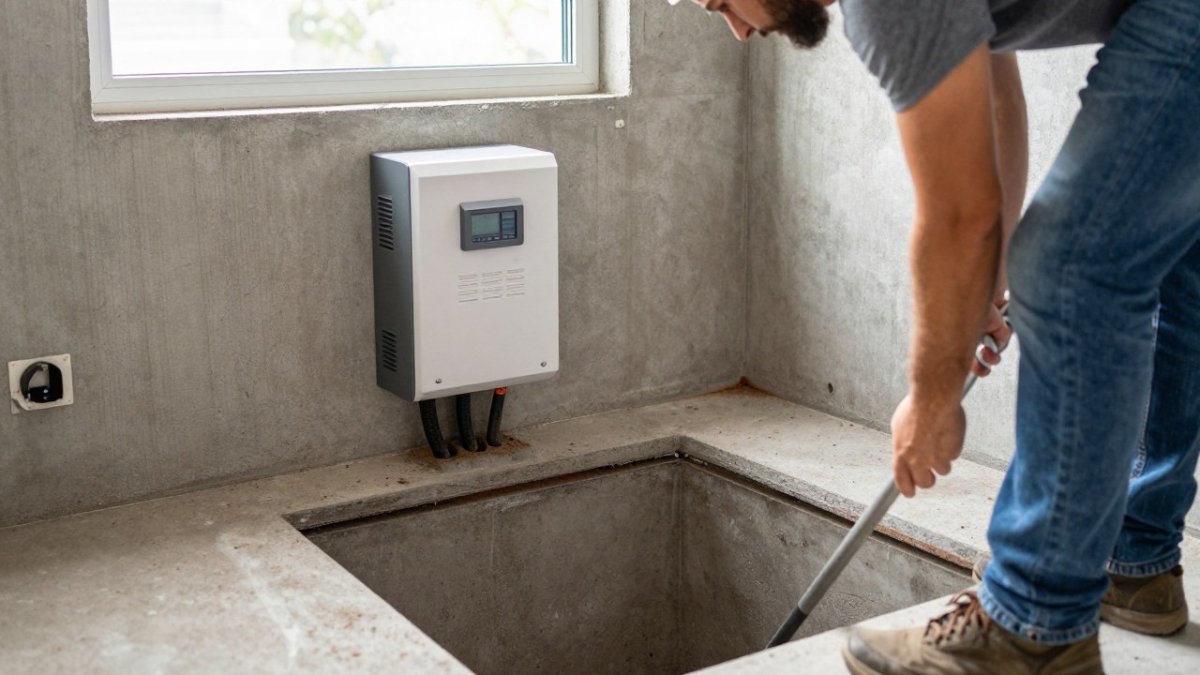
!A homeowner in a finished basement looking down at a sump pit beside a battery backup unit mounted on a concrete wall
Standalone vs. Combination Systems: Which Setup Fits Your Basement
A standalone system uses its own pump, separate from your primary pump. A combination system pairs both pumps in one unit, so the battery-powered pump can take over the primary's job during an outage.
Choose a standalone unit if your current pump works well and you want to keep it. Choose a combination system if you are replacing your primary pump anyway or your sump pit has room for two pumps. Check the pit's diameter before you buy, since some backup pumps are made for tight pits and others are not.
Top Sump Pump Battery Backup Systems Compared
No single backup system wins for every basement. The right pick depends on three numbers you can measure before you shop: your sump pit's inside diameter, the vertical lift from the pit floor to the discharge pipe's exit point, and the longest power outage your area has seen in the past decade. The table below summarizes what the research reports for each system; where a source gives no figure, we say so rather than guess.
| System | Type | Starting Price | Stated Flow | What the Research Says |
|---|---|---|---|---|
| Liberty Pump 441 | Battery backup | $180 (before battery) | Not stated | Lower overall cost than a comparison product |
| Basement Watchdog BWE | Battery backup | $172.93 | Not stated | Highlighted for tight sump pits |
| Wayne ESP25n | Standalone battery backup | Not stated | Not stated | Called reliable and straightforward for DIY installation |
| Basement Watchdog CONNECT 2890GPH | Battery backup | Not stated | 2,890 gallons per hour (conditions not stated) | Model name states the flow rate |
| Zoeller Aquanot Spin 508 | Battery backup | Not stated | Not stated | Appears in both a Consumer Reports result and homeowner discussion |
-
Best for: buyers who want to keep the initial system cost low and already own a compatible battery.
-
Skip if: you need the battery included in the quoted price.
-
Best for: homes with small, narrow pits.
-
Skip if: your pit is large and you want the most flow capacity.
Wayne ESP25n. A standalone battery-backup pump that reviewers describe as reliable and easy to install yourself. The research provides no specifications, warranty details, or price. As a standalone unit, it needs its own float switch and discharge line in the same pit as your primary pump.
-
Best for: handy homeowners who plan to install the unit themselves.
-
Skip if: you want published specifications before you buy.
-
Best for: buyers comparing units by stated flow rate.
-
Skip if: you need verified performance at your pump's lift height.
Zoeller Aquanot Spin 508. Zoeller backup systems appear in both a product-testing result and a homeowner discussion. The research does not include model-specific test findings. Zoeller is an established pump brand, which matters for parts availability years after purchase.
- Best for: homeowners who prefer an established brand name.
- Skip if: you need test data for this specific model.
Other models named in the research, including the PumpSpy PS2000C 1/2HP Backup, the 1622PS, and the MWXNE 2500W, appear in roundups without price or test details. Confirm their specifications with the manufacturer before you buy.
Sizing the Pump to Your Basement and Water Table
Sizing a backup pump is easier when you compare ratings at the same lift height rather than zero-lift figures. A backup that moves noticeably less water than your primary pump may fall behind during a storm.
Your water table and local rainfall intensity set how often the pump cycles, which sets how long the battery must last. Homes on high water tables or in areas with repeated multi-inch rain events need more runtime, not just more flow.
Watch out: a backup pump rated for high flow at zero lift can underperform badly at your pit's real lift height, so compare ratings at the same lift before you decide.
Pricing and What Each System Includes
Battery-backup sump pump units typically cost $150 to $520, and total installed cost starts at about $600, according to one 2026 cost guide (A1 Solar Store battery backup sump pump guide). The price depends on the pump's flow rate, the battery size, and the labor needed to install it. Some listings do not state what comes in the box, so check whether the battery, charger, and alarm are included before you compare prices.
For an accurate figure for your home, request a quote from Lone Eagle Home Services. Our current pricing is on our pricing page.
Sump Pump Backup Battery Runtime: How Long a Battery Keeps Pumping
Battery runtime depends on the battery's amp-hour rating, the pump's power draw, and how often the pump cycles. A pump that runs often, because of heavy rain or a high water table, drains the battery faster than one that runs occasionally.
That figure reflects the review's specific test conditions, so treat it as one data point rather than a guarantee. Your own runtime will depend on how much water enters your sump pit during an outage.
If your area loses power for long stretches during storms, choose a battery with more amp-hours rather than the smallest one that fits.
Adding Battery Backup to an Existing Sump Pump
You can add a battery backup to an existing sump pump by installing a separate backup pump in the same pit. The backup pump needs its own float switch and discharge line, both set at the correct height so the two pumps do not interfere with each other.
Some homeowners prefer a water-powered backup, which uses municipal water pressure instead of a battery. Water-powered units work only when your water supply is running, so they do not help during every type of outage.
If you are unsure whether your pit and discharge line can take a second pump, have a professional check before you buy.
Sump Pump Battery Maintenance and Replacement Schedule
Batteries are the weak point in any battery backup system, and most backup failures trace to a handful of preventable causes rather than to the pump itself. A maintenance routine built around those failure points keeps the system ready when storms knock out power.
A Twice-a-Year Test That Actually Checks the System
Check the battery and the pump at least twice a year, ideally before the spring rains and before the winter storm season. A test that only looks at the unit tells you little; run the pump instead.
- Test the float switch by hand. Lift the float and confirm the backup pump starts and moves water. A float that sticks in the down position is one of the most common reasons a backup fails to run during an outage.
- Run a load test on the battery. A voltage reading alone can look fine while the battery has lost its capacity. A load test under the pump's draw shows whether the battery can still carry the pump.
- Clean the pit and check the intake. Debris and sediment clog the intake screen and reduce flow, which makes the pump run longer and drain the battery faster.
- Confirm the discharge line is clear. A blocked or frozen discharge line makes the pump work against back pressure and can burn it out.
- Inspect terminals and connections for corrosion. Corroded terminals raise resistance and can keep the charger from topping off the battery.
Watch out: a float switch that sticks or a corroded terminal can leave a system that looks fine but will not start when the power fails, so test the pump under load rather than trusting a visual check.
Battery Chemistry: AGM vs. Wet-Cell
Battery type matters. Battery types differ, so choose the battery type your system's manufacturer recommends and follow its service schedule. AGM batteries are sealed and need no water, while wet-cell batteries can last longer with care but fail sooner if the water level is neglected.
When to Replace the Battery
Replace the battery when it fails a load test or when its runtime drops well below its rated level. Most homeowners should expect to replace the battery before they replace the pump. Keep a dated note on the battery so you know its age when a test result is borderline.
Failure Points to Watch Between Checks
Beyond the battery, the parts that fail most often are the float switch, the check valve, and the charger. A check valve that sticks open lets water drain back into the pit and makes the pump cycle repeatedly, which shortens battery runtime. A charger that stops working leaves the battery flat without any alarm on older units. If your system has an alarm or monitoring app, confirm it is still reporting, since a silent alarm is no better than no alarm.
For more on protecting your basement before storm season, read our guide to preventing basement flooding during heavy spring rain. Our room-by-room plan for preventing water damage in your home basement covers other steps beyond the pump.
Booking a Backup System Assessment With Lone Eagle
If you are not sure which system fits your pit, a professional assessment can save time and money.
Our membership plans include proactive seasonal tune-ups. You can review the home maintenance services Morris County homeowners rely on on our website, and read more about preventative home maintenance compared with reactive repairs.
Frequently Asked Questions
Which sump pump with battery backup is the most reliable?
Reliability depends on the pump's flow rate under load, the battery type and how the system is maintained. Consumer Reports has published testing of sump pump backup systems, measuring flow rate and battery draw, which can serve as a starting point for comparison. Look for a model that states its gallons-per-hour rating at a specific lift height, uses a deep-cycle or maintenance-free battery, and includes an alarm. Match the pump's capacity to your sump pit size and the height your discharge pipe has to lift water.
Is a battery backup for a sump pump worth it?
For most basements in flood-prone areas, yes. A primary pump fails without power, and a storm that knocks out electricity is often the same storm that drives water into the pit. Compare the cost of a backup unit to the cost of cleaning up a flooded finished basement, and weigh that against the protection it provides.
How long will a battery backup run a sump pump?
Runtime depends on battery capacity, pump draw and how often the pump has to cycle. Product reviews often report runtime figures measured under specific test conditions. Actual runtime shrinks if water inflow is heavy and the pump runs continuously. Check whether a product's runtime figure is based on intermittent cycling or continuous operation before comparing models.