 Listicle
8 Tips for Maintaining Home Safety Systems Year Round
Last Updated: November 5, 2026
Quick Summary
Maintaining home safety systems year round means following a written seasonal checklist: test smoke and carbon monoxide alarms monthly, replace their batteries twice a year, and replace the units on schedule. Also walk-test sensors, clean camera lenses, apply firmware updates, and review your emergency plan twice a year.
- Tie the twice-yearly smoke alarm battery swap to daylight saving time so you never forget.
- Replace smoke alarms every 10 years, or sooner if the test sounds muffled.
- Keep carbon monoxide detectors at least 15 feet from fuel-burning appliances to avoid false alarms.
- Dust control panels weekly and set a monthly reminder to check the app for firmware updates.
- Answer three questions in writing: who you call, where you meet, and who has a key.
Table of Contents
- 1. Build a Home Safety Maintenance Checklist That Covers Every Season
- 2. Smoke Alarm Maintenance: Test Monthly, Replace Batteries Twice a Year
- 3. Carbon Monoxide Detector Maintenance You Should Never Skip
- 4. Home Security System Maintenance: Panels, Sensors, Cameras, and Firmware
- 5. Secure Entry Points and Reduce False Alarms Before They Cost You
- 6. Cybersecurity and Emergency Response: The Two Gaps Most Homeowners Miss
- 7. Budget-Friendly Maintenance Hacks and Landscaping That Protects the Perimeter
- 8. Schedule Your Seasonal Tune-Ups With One Trusted Team
- Frequently Asked Questions
1. Build a Home Safety Maintenance Checklist That Covers Every Season
Home safety systems need a written schedule of the inspections, tests, and replacements that keep your alarms, locks, cameras, and network working all year. Without one, safety gear gets checked once and forgotten. With one, nothing slips.
The problem is that most homeowners treat safety equipment as install-and-forget. Detectors quietly age out. Batteries die without a chirp. Firmware sits two years out of date. The fix is a calendar you actually follow, split into four seasons:
- Spring: test smoke and carbon monoxide alarms, clear winter debris from gutters, trim shrubs back from the foundation
- Summer: clean camera lenses, check motion sensor coverage, review network passwords
- Fall: replace detector batteries, seal air leaks around doors and windows, schedule heating tune-ups
- Winter: confirm battery backups, test the control panel, check exterior lighting
Write it down and keep it where you'll see it. If you'd rather follow a proven structure than build one from scratch, our guide on how to create a home maintenance checklist walks through seasonal tasks, tools, and organization step by step.
A written seasonal calendar keeps alarms, locks, cameras, and networks from being checked once and forgotten.
| Season | Tasks |
|---|---|
| Spring | Test smoke and carbon monoxide alarms, clear gutters, trim shrubs from foundation |
| Summer | Clean camera lenses, check motion sensor coverage, review network passwords |
| Fall | Replace detector batteries, seal air leaks, schedule heating tune-ups |
| Winter | Confirm battery backups, test control panel, check exterior lighting |
2. Smoke Alarm Maintenance: Test Monthly, Replace Batteries Twice a Year
Smoke alarm maintenance is simple: press the test button once a month and change the batteries twice a year. A good habit is to tie the twice-yearly battery swap to daylight saving time so you never forget.
Testing takes under a minute. Hold the button until the alarm sounds, then let go. If the sound is weak or absent, replace the battery immediately.
Watch out: a chirping alarm is not a nuisance, it's a dying battery. Disconnecting it "for now" is how homes end up with no working smoke alarm on the night it matters. Replace the unit itself every 10 years, or sooner if the test sounds muffled.
3. Carbon Monoxide Detector Maintenance You Should Never Skip
Carbon monoxide detector maintenance follows the same rhythm as smoke alarms: test monthly, replace batteries twice a year, and replace the unit on the manufacturer's schedule. Carbon monoxide is odorless, so a dead detector gives you no warning at all.
Placement matters as much as testing. Put detectors on every level of the home and outside sleeping areas, and keep them at least 15 feet from fuel-burning appliances so they don't trigger false alarms. Never paint over a detector or block its vents.
If your detector ever sounds and you can't explain it, get everyone outside and call the fire department from a safe distance. That is not a DIY moment.
4. Home Security System Maintenance: Panels, Sensors, Cameras, and Firmware
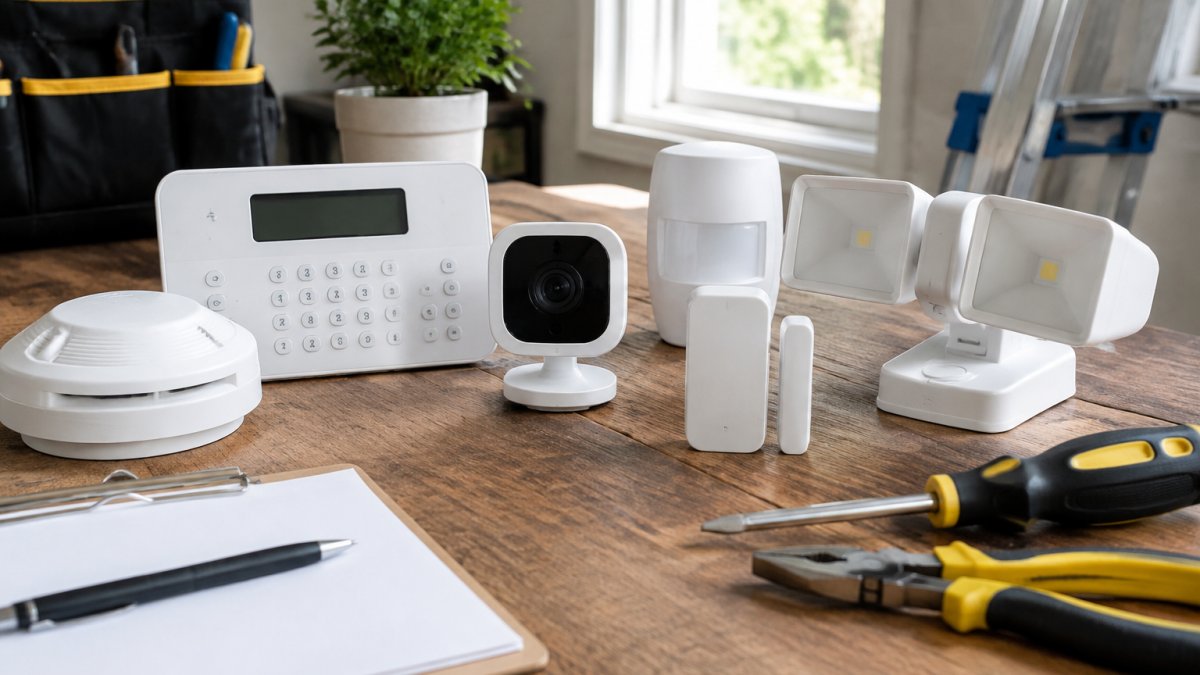
Home security system maintenance covers four things: the control panel, the sensors, the cameras, and the software. Skip any one and the whole system gets less reliable.
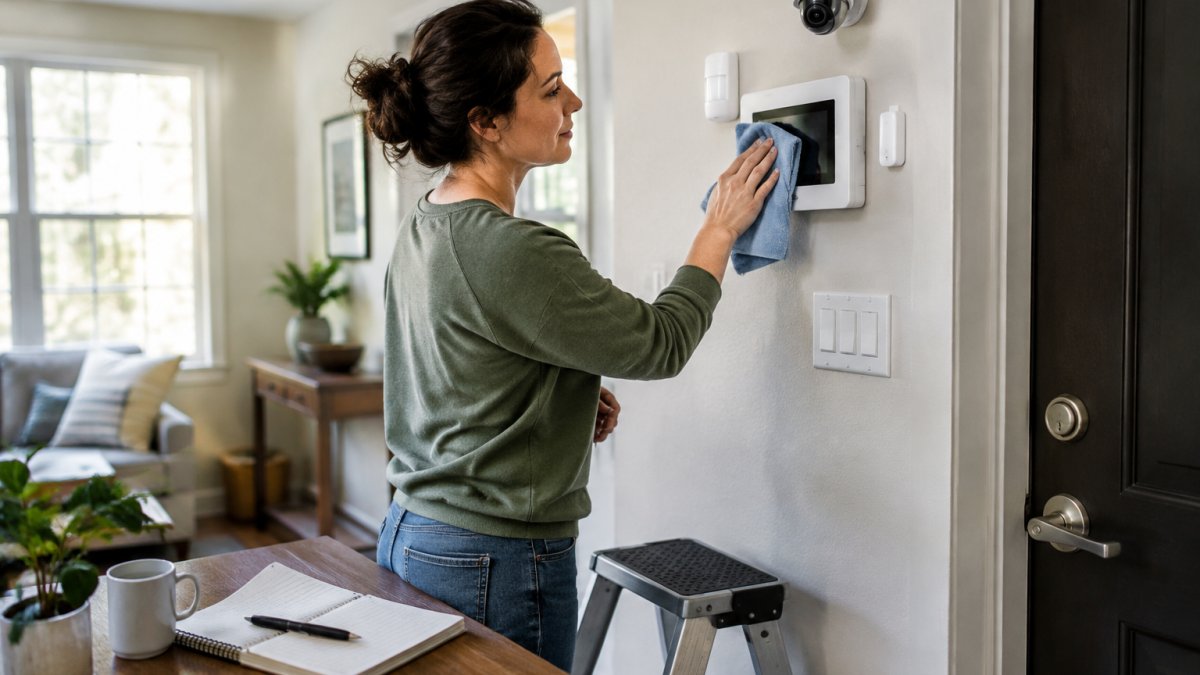
Start with the panel. Dusting control panels weekly keeps dust and cobwebs from interfering with internal components. Next, walk-test every motion sensor and door contact, and replace batteries as they age. Clean camera lenses with a microfiber cloth, and check that each camera still covers the angle you set.
Then handle firmware updates. Manufacturers release patches that fix security holes and bugs, and skipping them leaves your system exposed. Set a monthly reminder to check the app for updates and apply them.
5. Secure Entry Points and Reduce False Alarms Before They Cost You
Securing entry points means reinforcing the doors and windows an intruder would actually try, and calibrating sensors so they don't cry wolf. Both matter: a loose strike plate defeats a good lock, and a sensor that trips on every passing cat trains you to ignore real alerts.
Walk the perimeter and check:
- Deadbolts throw fully and the strike plate is anchored with long screws
- Window locks work on every accessible window, including basement and garage
- Door frames are solid, with no rot or gaps
- Motion sensors are angled away from heat vents, pets, and direct sun
Strong home protection combines physical hardware like deadbolts and window locks with digital safeguards. If a lock is loose, a frame is soft, or a door won't latch cleanly, that's a job worth handing to a professional before it becomes a break-in or a repair bill. Our team handles door, lock, and window service across Morris County with flat-rate pricing and confirmed appointments.
6. Cybersecurity and Emergency Response: The Two Gaps Most Homeowners Miss
Two things get left out of almost every home safety systems routine: the security of your smart home network and a plan for what happens after an alarm sounds.
On the network side, change the default password on your router and every smart device, turn on Wi-Fi encryption, and keep firmware current. A camera on an unsecured network is a window anyone can look through. Give guests a separate network and check which devices are connected each month.
On the response side, answer three questions in writing: who do you call, where do you meet, and who has a key? Post the plan where everyone can see it and review it twice a year. An alarm that nobody responds to correctly is just noise.
7. Budget-Friendly Maintenance Hacks and Landscaping That Protects the Perimeter
Most perimeter protection costs almost nothing. The trick is doing small tasks on a schedule instead of paying for big repairs later.
Trim shrubs back from foundation walls and keep tree branches off the roof. Preventative maintenance of this kind protects both safety and durability, and it also removes the cover an intruder wants. Clear gutters before winter, seal air leaks around doors and windows with weatherstripping, and keep exterior lights on timers so the house never looks empty.
For budget hacks: label every battery replacement date on the device itself, use your phone's calendar for monthly tests, and clean sensors with items you already own. Small habits beat expensive fixes.
8. Schedule Your Seasonal Tune-Ups With One Trusted Team
The hardest part of year-round safety isn't knowing what to do. It's remembering to do it, and finding someone reliable when a task turns into a repair.
That's the gap Lone Eagle Home Services fills. Our membership gives you one trusted team for seasonal tune-ups, on-demand repairs, and vendor coordination, so you're not juggling separate contractors for alarms, locks, gutters, and HVAC. You get flat-rate pricing, confirmed appointments, and uniformed technicians. If you're weighing whether proactive care is worth it, our guide to the benefits of seasonal home tune-ups explains the reasoning. When you're ready to book, here's how to schedule HVAC tune-ups step by step, and you can see the full service offering and get started.
Frequently Asked Questions
How often should you test home safety systems?
Test smoke alarms and carbon monoxide detectors monthly using the test button, and change their batteries twice a year. Walk-test motion sensors and door contacts quarterly, and check security camera footage and backup batteries at the same time. Dust control panels weekly so cobwebs and dust do not interfere with internal components. Log every test date so you can spot a device that keeps failing instead of guessing.
How often should smoke and carbon monoxide alarms be replaced?
Replace smoke alarm and carbon monoxide detector units on the manufacturer's recommended schedule, even if they still pass a test. Sensors degrade with age and can stop detecting gas or smoke long before the unit looks worn. Write the install date on the back of each device with a marker so you never have to guess. Pair the replacement with your smoke alarm maintenance routine: test monthly, swap batteries twice a year, and replace the whole unit on schedule.
What should be included in a home safety maintenance checklist?
A working home safety maintenance checklist covers four areas: life-safety devices (smoke alarms, carbon monoxide detectors, fire extinguishers), the security system (panel, sensors, cameras, firmware updates, battery backup), the building envelope (door and window locks, deadbolts, air leaks, gutter maintenance), and the perimeter (landscaping, exterior lighting, visibility from the street). Add a quarterly walk-through and a seasonal inspection each spring and fall. Keep the list in one place and note the date every task was completed.
How do you maintain a home security system without a service contract?
Start with the panel: dust it weekly, confirm the battery backup holds a charge, and install firmware updates when prompted. Walk-test every motion sensor and door contact, clean camera lenses, and check that Wi-Fi encryption is on and the router password is not the default. Trim shrubs away from cameras and foundation walls so nothing blocks the view or invites pests. If self-maintenance becomes a monthly chore, a membership service that bundles seasonal tune-ups and digital service reports can take it off your list.
Your home's safety systems only protect you when they're tested, updated, and maintained on a schedule. Lone Eagle Home Services handles that schedule for you with proactive seasonal tune-ups, flat-rate pricing, and a single point of contact for every repair. Get started with Lone Eagle Home Services and keep your home protected all year.