 How-to
How Much Does It Cost to Install Home Safety Features in 2026?
Quick Summary
Installing home safety features typically costs from about $130 for a basic DIY alarm kit to over $2,000 for a comprehensive professionally installed system. Professional installation labor for a home security system averages $179 to $607 nationwide, while equipment and monitoring are billed separately. Monitoring commonly runs $20 to $60 per month, so compare quotes by three-year total cost of ownership.
- Professional security installation labor averages $179 to $607 nationwide, per Thumbtack.
- Equipment is usually the largest single expense, ranging from $199 to $2,500 or more per Vivint.
- Professional monitoring commonly runs $20 to $60 per month.
- Three years of monitoring can total $720 to $2,160, often exceeding equipment cost.
- Some homeowner insurers offer discounts for professionally monitored systems, so ask before deciding.
Table of Contents
- What Home Safety Features Actually Cost to Install in 2026
- Home Security System Installation Cost: Equipment, Labor, and Monitoring
- Smoke Detector Installation Cost and Room-by-Room Safety Checklist
- DIY vs. Professional Home Safety Installation: Which Costs Less Over Time
- Permits, Electrical Work, and Structural Modifications That Change the Price
- How to Find Safe Installation Near Me and Compare Contractor Quotes
- Booking Your Home Safety Installation With Lone Eagle Home Services
- Frequently Asked Questions
What Home Safety Features Actually Cost to Install in 2026
Last Updated: November 19, 2026
Most homeowners who ask what it costs to install home safety features get a range, not a single number.
Equipment is usually the largest single expense. Vivint's published cost guide puts system equipment at roughly $199 to $2,500 or more, installation at $0 to $199, and monitoring at $20 to $60 per month.
Pricing also depends on what you install. A basic DIY alarm kit can start at $130, while a comprehensive professionally installed system can exceed $2,000, according to NerdWallet's home alarm comparison.
Home Security System Installation Cost: Equipment, Labor, and Monitoring
A home security system has three cost layers: equipment, installation labor, and monitoring. Each one is billed differently, and comparing quotes is easier once you separate them.
Forbes Home's review of installation costs reports installation costs for systems it reviewed ranging from free to $299, with an average near $150. Smart home systems, which bundle more devices, average $175 to $1,363 according to Angi's smart home cost data.
Equipment costs by system type
Equipment cost varies with the system you choose. Wired systems usually cost more upfront because they require running cable through walls. Wireless systems are easier to install yourself and cost less at the start, though batteries need replacing.
Typical equipment choices include:
- Control panel and keypad
- Door and window sensors
- Motion detectors
A starter package with a panel and a few sensors often costs far less than a full-coverage system with cameras. Ask any installer to itemize the equipment so you can see which components drive the price.
What drives labor cost on a security install
Installation labor is quoted by the job, not by the hour, on most residential security work. The price reflects how many devices get mounted, how far cable has to travel, and what the installer has to cut into.
Three variables move the labor line the most:
- Wall type: Drywall is fast to open and patch. Plaster and lath, common in older homes, slow the work and raise the quote.
- Wiring path: An unfinished basement or attic gives the installer a clear run. Finished ceilings and vaulted spaces force creative routing.
- Device count and placement: Each additional camera, keypad, or glass-break sensor adds mounting and testing time. High-mounted or exterior devices add ladder work.
Ask the installer whether the quote assumes a like-for-like replacement of existing devices or a fresh run. The two are priced very differently even when the device list looks identical.
Monthly monitoring fees and hidden costs
Monitoring is the recurring cost many homeowners underestimate. Professional monitoring commonly runs $20 to $60 per month. Over three years, that adds up to $720 to $2,160, often more than the equipment itself.
Watch for these additional charges:
- Activation or setup fees
- Contract length requirements and early cancellation penalties
- Equipment rental fees instead of purchase
Read the monitoring contract before signing. Ask what happens to your equipment if you cancel.
Three-year cost of ownership by system tier
Comparing quotes by sticker price hides the real difference between a budget kit and a full system.
- Starter wireless kit: Low equipment cost, self-install or minimal labor, and monitoring at the low end of the $20 to $60 range. The three-year total is usually the smallest of the three tiers, but coverage is limited to a few entry points.
- Professionally installed midrange system: Higher equipment cost, paid labor, and monitoring in the middle of the range. The three-year total typically lands well above the starter kit, but you get professional placement, testing, and a workmanship warranty.
- Full-coverage system with cameras: Cameras drive the equipment line, exterior mounting drives the labor line, and monitoring sits at the top of the range. This is the tier where the three-year total most often exceeds the equipment price several times over.
Run the same three-year math on every quote you receive. A system that looks cheaper at signing can cost more by year three once monitoring and battery replacement are included.
The three cost layers of a security system are billed differently, so the figures below are easier to compare when laid side by side.
| Cost layer | Typical figure | What to note |
|---|---|---|
| Equipment | $199 to $2,500 or more | Cameras add the most cost per unit |
| Installation labor | $0 to $199 (Vivint); about $150 average (Forbes Home) | Quoted by the job, not by the hour |
| Monitoring | $20 to $60 per month | Often exceeds equipment cost over three years |
| Smart home systems | $175 to $1,363 (Angi) | Bundle more devices |
| Three years of monitoring | $720 to $2,160 | Calculated from $20 to $60 per month |
Smoke Detector Installation Cost and Room-by-Room Safety Checklist
Smoke detectors are often the most affordable home safety upgrade, and many homeowners install them in every bedroom and hallway without a second thought. Costs depend on whether the detectors are hardwired into your electrical system or battery-powered.
Battery-powered units are inexpensive and easy to install yourself. Hardwired units, which connect to your home's wiring and often link together so one alarm triggers all of them, cost more because they require an electrician or qualified installer. Spot electrical hazards early with outlet and cord checks as you go room by room.
Room-by-room installed safety checklist
Use this list to scope a whole-home safety upgrade. Each line names the feature, where it goes, and the installation consideration that affects price.
- Bedrooms: One smoke detector per sleeping area, plus one outside each sleeping zone. Add a carbon monoxide alarm near the sleeping area on any level with a fuel-burning appliance. Consider a bedside emergency light.
- Hallways and stairs: At least one smoke detector on each floor. Add handrails on both sides of stairs where width allows, and a night light or motion-activated light at the top and bottom of each flight. Stair safety is one of the highest-value fall-prevention upgrades in the home.
- Bathrooms: Grab bars in the tub and shower, a non-slip mat or applied non-slip strips, and a comfort-height toilet if mobility is a concern. Grab bars must be anchored into blocking or studs, a hollow-wall anchor will not hold a falling adult.
Accessibility and fall-prevention installations
Grab bars, handrails, ramps, and improved lighting are the safety projects most likely to be skipped because they are not part of a security package. They are also the ones that most directly reduce injury risk for older adults and anyone with mobility needs.
- Grab bars: Cost depends on whether blocking exists behind the wall. Retrofitting blocking into a finished tiled shower is the expensive part, not the bar itself.
- Handrails: A straight run on an open wall is a simple install. A rail that follows a curve or returns on itself takes custom fabrication.
- Threshold ramps: Off-the-shelf ramps for a single step are inexpensive. A poured or modular ramp for a full flight is a structural project with its own permit questions.
How to sequence the projects
A practical order is to fix life-safety items first, then fall prevention, then security. Smoke and carbon monoxide coverage, stair rails, and bathroom grab bars protect against the events most likely to cause injury. Lighting and door hardware come next. Cameras and monitoring round out the plan once the physical safety basics are in place.
DIY vs. Professional Home Safety Installation: Which Costs Less Over Time
DIY installation saves money upfront, and it is the most common reason homeowners choose it. Security.org's 2026 DIY home security study found that 70% of respondents who preferred DIY cited lower cost as their main reason, and 43% cited installing on their own schedule.
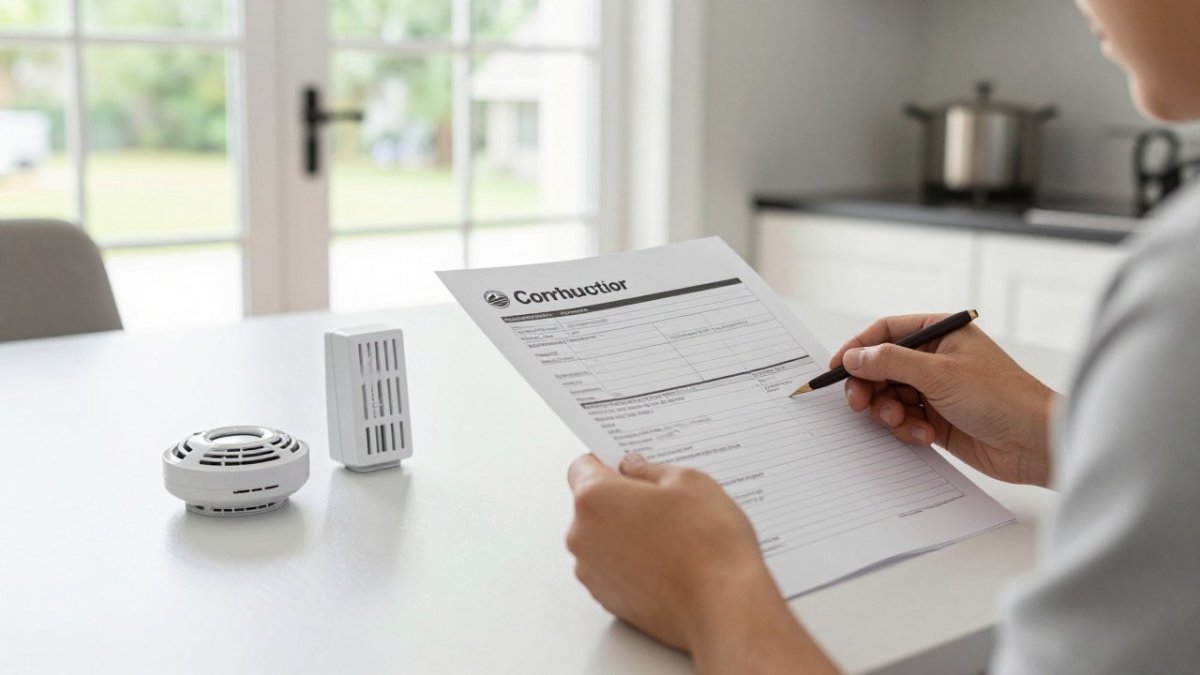
DIY has real limits. If you are weighing ongoing upkeep too, see what a home maintenance plan covers and costs.
Over time, the comparison shifts. A DIY system that you later need professionally reconfigured can cost more than a professional installation done right the first time.
Watch out: Some homeowner insurers offer discounts for professionally monitored systems. Ask your insurer before you decide, since the discount can offset part of the monitoring fee.
Permits, Electrical Work, and Structural Modifications That Change the Price
Some installations need more than a screwdriver. Running new wiring, cutting into walls, or adding a camera on an exterior wall can trigger permit requirements and additional labor. Permit rules and fees are set locally, so check with your municipality before work begins.
Work that often raises the price includes:
- Running new low-voltage or line-voltage wiring through finished walls
- Adding a dedicated circuit for cameras or a panel
- Drilling for exterior cabling or conduit
- Installing a safe, wall anchor, or vault door, which requires reinforcement
Plan for these costs early. Older homes with plaster walls often need more labor than newer drywall construction.
How to Find Safe Installation Near Me and Compare Contractor Quotes
Searching for safe installation near me will turn up many contractors, and quotes vary widely. Ask each installer for a written, itemized estimate that lists equipment, labor, monitoring, and any permit fees.
Before you hire anyone, confirm these points:
- The contractor holds a valid license for the work and carries liability insurance
- The quote separates equipment from labor and shows monitoring costs
- The warranty covers both the equipment and the workmanship
- You know who handles repairs after installation
Compare at least three quotes for the same scope of work. A quote that is much lower than the others may leave out required items or use lower-grade equipment.
Booking Your Home Safety Installation With Lone Eagle Home Services
Lone Eagle Home Services offers membership-based home maintenance for Morris County homeowners, with one trusted team coordinating repairs, seasonal tune-ups, and vendor work. Visit the Lone Eagle Home Services pricing page for current membership rates or to request a quote for your home safety installation.
Frequently Asked Questions
What is the average cost of a home security system installation?
Professional installation labor for a home security system averages $179 to $607 nationwide, according to Thumbtack's 2026 data, and installation-only estimates from U.S. News & World Report run about $100 to $300 or more depending on what is installed. Forbes Home reports installation costs ranging from free to $299, with an average near $150. Equipment is priced separately: Vivint puts equipment at $199 to $2,500 or more, and monitoring at $20 to $60 per month. Total cost depends on system size, the number of sensors and cameras, and whether you choose a wired or wireless setup.
How much does it cost to install a smoke detector?
Smoke detector installation is one of the lower-cost home safety upgrades. Many homeowners install detectors themselves, since the work involves mounting units and testing them. If you hire a professional, expect labor to be billed as part of a broader electrical or alarm visit rather than as a standalone fee. Pricing varies by region and by whether the unit is hardwired or battery powered, so request an itemized quote before booking.
Is it cheaper to install home safety features yourself or hire a professional?
A basic DIY home alarm kit can start at $130, according to NerdWallet, which makes DIY the lowest upfront cost. In Security.org's 2026 survey, 70% of respondents who preferred DIY cited lower cost as their main reason. Professional installation adds labor but can prevent wiring mistakes, warranty problems, and the time spent troubleshooting a system yourself. Hardwired work that touches electrical systems or requires a permit is usually better left to a licensed professional.
What home safety upgrades are worth paying a professional to install?
Upgrades that involve electrical work, structural changes, or permits are usually worth professional installation. Examples include hardwired smoke and carbon monoxide alarms, video doorbells tied into existing wiring, and wall or floor safes that require anchoring into framing. Simple battery-powered sensors and plug-in cameras are generally easy to handle yourself. Ask any installer to confirm whether a permit is needed in your municipality before work begins.