 How-to
Home Safety Improvements for Families: A Room-by-Room Plan
Quick Summary
Home safety improvements for families start with a room-by-room checklist that covers entryways, kitchens, bedrooms, bathrooms, stairs and storage areas. Each room is checked for falls, injuries and emergencies, and fixes are ranked by risk and ease of completion.
- A systematic review found that 13 of 20 studies, or 65%, confirmed home modifications were effective for fall prevention.
- Anchor tall furniture, TVs and bookcases to the wall to prevent tip-over injuries to toddlers.
- Install grab bars into studs, not just tile or drywall, so they hold weight.
- Test smoke and carbon monoxide alarms monthly and replace batteries at least once a year.
- Hire a licensed professional for electrical work, structural anchoring and window restrictors fixed into a frame.
Table of Contents
- Why Home Safety Improvements Matter for Families
- Start With a Room-by-Room Home Safety Checklist for Families
- Childproofing a Home: Safeguards for Young Children
- Fall Prevention at Home: Stairs, Bathrooms and Grab Bars
- Lighting, Trip Hazards and Slip-Resistant Flooring
- Budget-Friendly Home Safety Upgrades and When to Hire a Professional
- Fire, Carbon Monoxide and Emergency Preparedness
- Scheduling Your First Whole-Home Safety Review
- Frequently Asked Questions
Why Home Safety Improvements Matter for Families
Home safety improvements for families reduce the chance of falls, injuries and emergencies before they happen. Lone Eagle Home Services helps Morris County households plan and maintain these upgrades so the work gets done without the hassle of juggling several contractors.
A systematic review of 20 studies found that 13 of them, or 65%, confirmed that home modifications were effective for fall prevention, functional independence and cost savings A Systematic Review of Home Modifications for Aging in Place.
Families face two different risk profiles at once. Young children climb, reach and explore. Older adults need steady footing, good lighting and grab points. A single home safety plan has to cover both.
- Children are most at risk from unsecured furniture, cords and open water.
- Adults and older relatives are most at risk from stairs, wet floors and dim hallways.
- Both groups benefit from clear pathways and working smoke and carbon monoxide alarms.
Researchers who studied child home-safety programs found that training practitioners who work with families of preschool children can improve injury-prevention knowledge and beliefs Evaluating the effect of child home safety training upon practitioners. Knowledge helps, but the house itself has to be made safer too.
Start With a Room-by-Room Home Safety Checklist for Families
A room-by-room checklist turns a vague worry into a short list of tasks. Walk each room and ask one question: what could hurt someone who lives here or visits?

Work through the house in this order:
- Entryways: Check that the front and back doors latch, that thresholds are flush, and that the path outside is lit.
- Kitchen: Secure appliances, keep hot liquids away from the counter edge, and store cleaning products up high or behind locks.
- Living areas: Anchor tall furniture and TVs, tuck cords out of reach, and remove loose rugs.
- Bedrooms: Confirm night lights and clear paths to the bathroom.
- Bathrooms: Look for slip risks, hot water settings and medicine stored out of reach.
- Stairs and hallways: Check handrails, step lighting and gates at the top and bottom.
- Garage and basement: Lock away tools, chemicals and fuel.
Write down each problem, then rank the fixes by two things: how serious the risk is and how easy the fix is. Start with the quick, high-impact tasks.
The room-by-room checklist covers the main areas of the house and the risks to check in each one.
| Room | Main check | Fix type |
|---|---|---|
| Entryways | Doors latch, thresholds flush, path lit | Check and adjust |
| Kitchen | Appliances secured, cleaners locked up | Secure and store |
| Living areas | Tall furniture anchored, cords out of reach | Anchor and tuck |
| Bedrooms | Night lights, clear path to bathroom | Light and clear |
| Bathrooms | Slip risks, hot water, medicine out of reach | Mats and storage |
| Stairs and hallways | Handrails, step lighting, gates | Check and add |
| Garage and basement | Tools, chemicals and fuel locked away | Lock away |
Childproofing a Home: Safeguards for Young Children
Childproofing focuses on the things small children reach, pull and climb. Most of it is inexpensive. The bigger jobs, like securing windows or fixing a heavy door, often need a professional.
Common childproofing steps include:
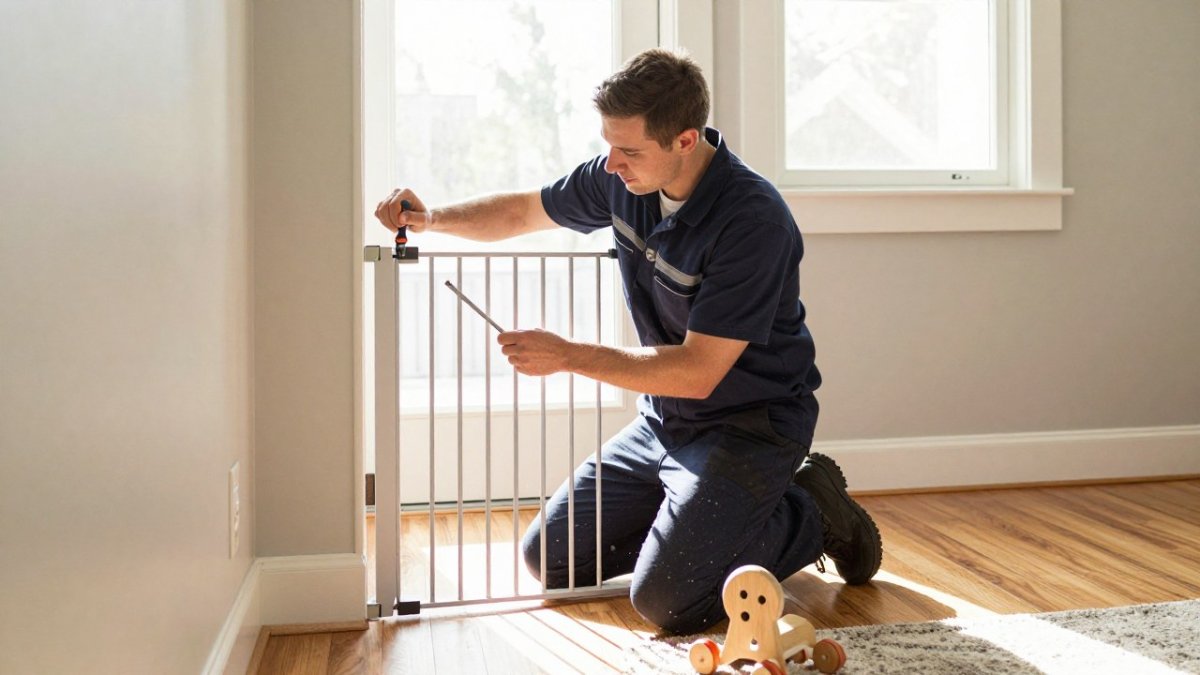
- Installing safety gates at stairs and in doorways near the kitchen
- Fitting cabinet and drawer locks in the kitchen and bathroom
- Covering electrical outlets and running cords out of reach
- Anchoring dressers, bookcases and TVs to the wall
- Adding window guards or limiters on upper floors
- Keeping button batteries, small magnets and medicines locked up
Anchoring furniture is one of the most important steps, since tip-over injuries are a serious risk for toddlers. Use the wall anchors that match your wall type. Plaster, drywall and brick each need different hardware.
Some childproofing jobs go beyond what a homeowner should attempt alone. Window restrictors that must be fixed into a frame, door hardware on older doors, and outlet work that involves wiring all call for a licensed professional. You can see the door, lock and window services offered for these safeguards.
Fall Prevention at Home: Stairs, Bathrooms and Grab Bars
Falls are one of the most common home injuries for older adults and a real risk for anyone who is recovering from illness or surgery. Prevention focuses on three areas: stairs, bathrooms and lighting.
Stairs should have sturdy handrails on both sides when possible, non-slip treads, and lighting at the top and bottom. Make sure carpet edges are secured and that nothing is stored on the steps.
Bathrooms need the most attention. Consider these upgrades:
- Grab bars anchored into studs, not just the tile or drywall
- Non-slip mats or treads in the tub and shower
- A raised toilet seat or toilet frame if mobility is limited
- A shower chair or handheld showerhead for seated bathing
Grab bars only work when they are fastened into solid framing. A bar that pulls out under weight can cause a worse fall than having no bar at all. This is a job for a professional who can locate studs and use the right anchors.
Lighting, Trip Hazards and Slip-Resistant Flooring
Poor lighting and loose flooring cause many everyday falls, and the fixes are among the cheapest in this guide.
Lighting. Aim for even, shadow-free light on stairs, in hallways, and at every entry. A common pattern is one dim ceiling fixture per hallway, which leaves the top and bottom steps in shadow.
Trip hazards. Walk each path the way a family member actually uses it, not the way the room is arranged for looks.
Slip-resistant flooring. In wet areas, choose finishes rated for slip resistance. Textured tile and matte finishes grip better than glossy surfaces, and a matte sealer on existing tile can improve grip without replacement.
Lighting and flooring changes range from a weekend DIY project to a larger job. Swapping bulbs, adding plug-in night lights, and securing rugs are safe for most homeowners.
Budget-Friendly Home Safety Upgrades and When to Hire a Professional
This section offers a simple decision framework so families can tell which fixes they can handle themselves and which call for a professional.
Free and low-cost fixes. These are safe for most homeowners and deliver the highest safety return per dollar:
- Rearranging furniture to clear paths and moving heavy items to lower shelves
- Adding plug-in night lights in hallways and bathrooms
- Using cabinet latches, outlet covers, and door knob covers
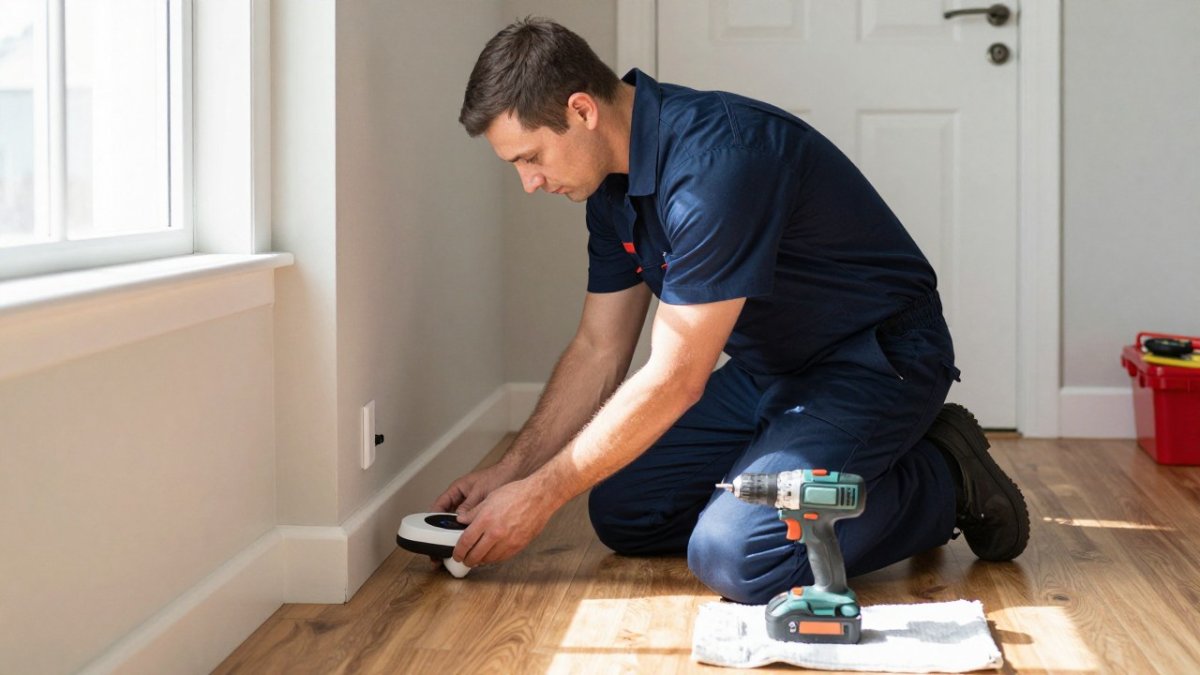
- Testing smoke and carbon monoxide alarms and replacing batteries
- Securing throw rugs with non-slip backing and running cords along walls
- Anchoring a dresser or bookcase to a wall with a manufacturer-supplied strap kit
Mid-range fixes. These are usually DIY-friendly but reward careful work:
- Safety gates at stairs and doorways
- Window guards or limiters on upper floors
- Non-slip treads on stairs and in the tub
- A handheld showerhead or shower chair
- Additional smoke and carbon monoxide alarms
Fixes that call for a professional. Hire a licensed contractor when the job involves:
- Electrical work, including new outlets, circuits, or wiring for lighting
- Structural anchoring into studs or framing, such as grab bars and stair railings
- Window restrictors fixed into a frame, and door hardware on older doors
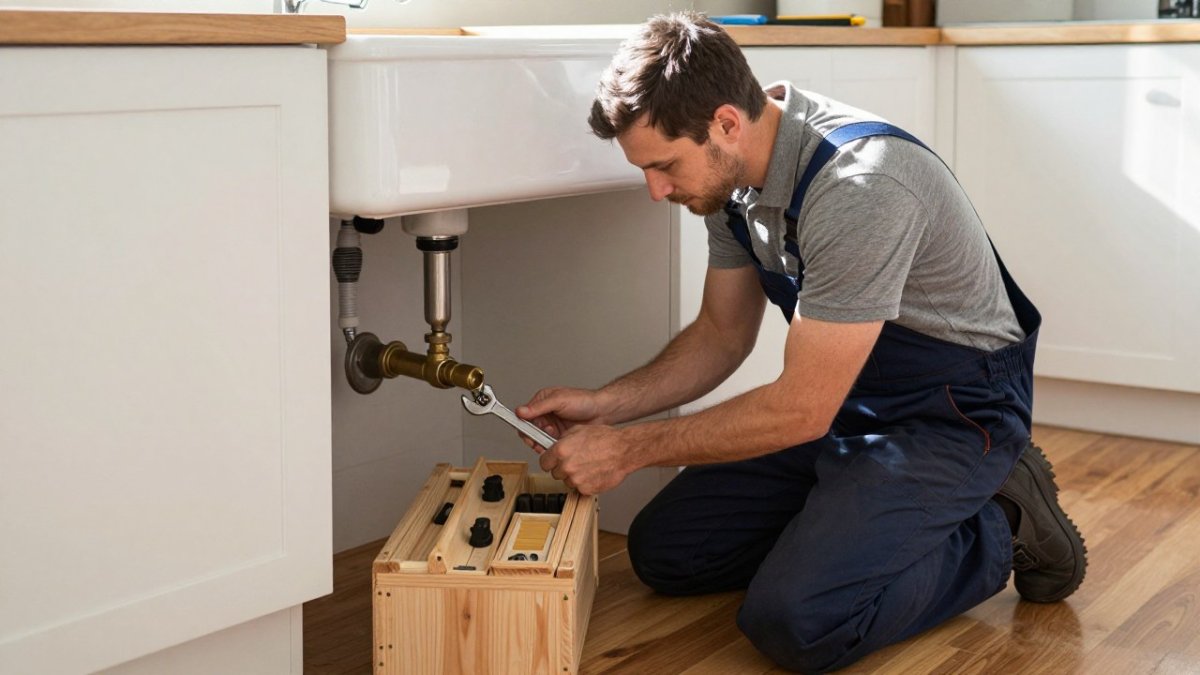
- Plumbing changes, such as relocating a shower or adding a handheld fixture
- Ramps, widened doorways, or anything that requires a permit
The DIY-versus-pro test. Ask three questions before starting: Does the job involve electricity, water, or the structural frame? Does a failure under load create a worse hazard than doing nothing? Does local code require a permit or inspection? If the answer to any is yes, hire a professional.
Funding and financial assistance. Families rarely need to pay for everything at once. A common pattern is to phase upgrades over a year, starting with free fixes and saving the professional work for a single planned visit.
Watch out: A quote that bundles electrical, plumbing, and carpentry work without a written scope makes it hard to compare bids or confirm what is covered, so ask for the scope in writing before any deposit.
A professional can assess the whole house, set priorities, and coordinate the work across trades. For current details, visit the company's website.
Fire, Carbon Monoxide and Emergency Preparedness
Safety improvements are not only about falls and injuries. Fire and carbon monoxide are serious threats that many homes overlook.
Start with the basics:
- Install smoke alarms on every level and inside each sleeping area.
- Install carbon monoxide alarms near sleeping areas and on each floor.
- Test alarms monthly and replace batteries at least once a year.
- Replace smoke alarms that are more than about 10 years old.
- Keep fire extinguishers in the kitchen and garage, and check their gauges.
Plan an escape route from every bedroom and practice it with the whole family. Pick a meeting spot outside. Teach children how to call emergency services and what their home address is.
Keep a basic emergency kit with flashlights, batteries, a first-aid kit, bottled water and copies of important medical information. Store medicines and household chemicals in locked cabinets away from children.
Scheduling Your First Whole-Home Safety Review
The best way to start is with a whole-home review. A professional walks through the house, notes the risks and gives you a prioritized plan. You can then decide what to do yourself and what to hand off.
To prepare for the visit:
- Use the room-by-room checklist above to note your main concerns.
- Make a list of household members with specific needs, such as young children or relatives with mobility limits.
- Gather any previous inspection reports or repair records.
- Decide on your budget range so the plan can be sorted by cost.
- Note any upcoming changes, such as a new baby or a relative moving in.
Lone Eagle Home Services offers membership-based home maintenance with confirmed appointments, uniformed technicians, and digital service reports after each visit. Those reports make it easier to track what was fixed and what still needs attention. Visit the company's website to review plans and book your first review.
Frequently Asked Questions
What are the top 10 home improvements for safety?
The most useful safety improvements for most families usually include grab bars and non-slip mats in bathrooms, handrails on both sides of stairs, motion-sensor or night lighting along hallways and stairs, secured furniture and anchored bookshelves, outlet covers, cabinet and drawer latches, smoke and carbon monoxide alarms on every level, clear walkways free of clutter, slip-resistant flooring in wet areas, and a fire extinguisher in the kitchen. Start with the items that address the highest-risk rooms in your home, then work through the rest over time. Costs vary widely by project and region, so get written estimates before committing.
How can I make my home safer for young children?
Begin by getting down to a child's eye level and looking for hazards: exposed outlets, loose cords, small objects, cleaning products within reach, and furniture that can tip. Install outlet covers, cabinet latches, stair gates at the top and bottom of stairs, and window guards or stops that limit how far windows open. Anchor heavy furniture and TVs to the wall. Keep medications and button batteries in locked storage. Review these measures every few months, because children reach new developmental stages quickly and hazards change with them.
Which home modifications help prevent falls?
Research on home modifications points to fall prevention and greater independence as key benefits, which makes them a practical investment. The most commonly recommended changes are grab bars beside the toilet and in the shower, handrails on both sides of stairs, improved lighting on stairs and in hallways, removing loose rugs and clutter, and slip-resistant flooring in bathrooms and kitchens. Household members of any age benefit from these changes, especially during late-night trips.
How often should families review home safety?
Most families should do a full walkthrough at least once a year and after any major change, such as a new baby, a new pet, a renovation or an older relative moving in. Check smoke and carbon monoxide alarm batteries and test them monthly, and replace smoke alarms that are more than 10 years old. Revisit childproofing as children grow, since a gate or latch that worked at age one may be unnecessary or ineffective by age three.