 How-to
Is Loud HVAC Startup an Emergency? What Homeowners Should Know
Last Updated: November 8, 2026
Quick Summary
A loud HVAC startup is not automatically an emergency, but it is one when the noise comes with a burning smell, a tripped breaker, or a system that will not stay running. A loud bang, grinding, or screeching that repeats or gets worse is a warning sign of a mechanical or electrical problem, so shut the system off and call a professional.
- A single soft click or thump at startup is usually normal and can wait for your next tune-up.
- A loud bang or boom at furnace startup suggests delayed ignition, so shut the furnace off and call a professional.
- Grinding, screeching, or metallic noise points to mechanical failure in a bearing, blower, or compressor.
- If a breaker trips at startup, turn the system off at the thermostat and call a professional instead of resetting it.
- Do not open the outdoor unit or furnace cabinet yourself because capacitors can hold a dangerous charge after power is off.
Table of Contents
- Loud HVAC Startup: When Noise Signals a Real Emergency
- Normal Startup Sounds Versus Signs of a Problem
- When Your HVAC Makes Loud Noise When Starting and Stopping
- Why Your Furnace Is Making Loud Noise at Startup
- AC Capacitor Symptoms and Other Electrical Causes of Loud Startup
- HVAC Vibration Noise: Loose Parts and Mechanical Failure
- Safety Steps Before Help Arrives and How to Document an Intermittent Noise
- What to Expect From Emergency Service and How Urgency Affects Cost
- Frequently Asked Questions
Loud HVAC Startup: When Noise Signals a Real Emergency
A loud HVAC startup is not automatically an emergency, but some sounds demand that you shut the system down immediately.
Here is the short version: a single soft click or thump is usually normal.
A loud HVAC startup that comes with a burning smell, a tripped breaker, or a system that will not stay running is a clear emergency signal.
Here is a quick-reference breakdown of startup sounds and what each one means for your next step.
| Sound or sign | What it suggests | What to do |
|---|---|---|
| Soft click, low hum, soft thump, whoosh | Normal startup | Watch and mention at next tune-up |
| Loud bang or boom at furnace startup | Delayed ignition | Shut furnace off and call a professional |
| Grinding, screeching, or metallic noise | Mechanical failure in bearing, blower, or compressor | Turn system off and schedule service promptly |
| Humming but not starting, loud buzzing outdoors | Failed capacitor or electrical fault | Do not reset breaker; call a professional |
| Rattle at startup and shutdown | Loose access panel or duct connection | Note it and watch whether it worsens |
| Burning smell, gas odor, smoke, or sparking | Clear emergency signal | Turn system off; leave if gas smell and call from outside |
| Breaker trips at startup | Electrical fault, failing capacitor, or shorted compressor | Turn off at thermostat and call a professional |
Normal Startup Sounds Versus Signs of a Problem
Normal startup sounds are brief, soft, and repeat the same way every cycle.
Signs of a problem sound and behave differently:
- The noise is loud enough to hear across the house or over normal conversation
- It lasts more than a few seconds after the system settles
- It changes, repeats every cycle, or gets worse week over week
- It comes with a burning or gas smell, a tripped breaker, weak airflow, or a system that short-cycles
A common mistake is ignoring a noise because the system still heats or cools. That works until it doesn't. A loose part can turn into a motor or compressor failure if you wait.
To decide how urgent a startup noise is, run this quick decision sequence before you call anyone:
- Is there a burning smell, gas odor, smoke, or sparking? If yes, stop. Turn the system off at the thermostat, leave the area if you smell gas, and call your gas provider or 911 from outside. Do not reset the breaker.
- Did the breaker trip when the system started? A breaker that trips at startup points to an electrical fault, a failing capacitor, or a shorted compressor. Do not keep resetting it to "see if it works." Turn the system off at the thermostat and call a professional.
- Is the sound a loud bang or boom at furnace startup? That pattern suggests delayed ignition, where gas builds up before it lights. Shut the furnace off and call a professional; do not run it to test.
- Is the sound grinding, screeching, or metallic and does it continue after startup? Grinding and screeching usually mean a mechanical failure in a bearing, blower, or compressor. Turn the system off and schedule service promptly; running it can turn a repair into a replacement.
- Is the sound a rattle, hum, or soft thump that stops within a few seconds? That is usually normal or a minor loose-panel issue. Note it, watch whether it worsens, and mention it at your next tune-up.
A useful rule of thumb: sound plus a symptom is an emergency; sound alone is usually a prompt service call.
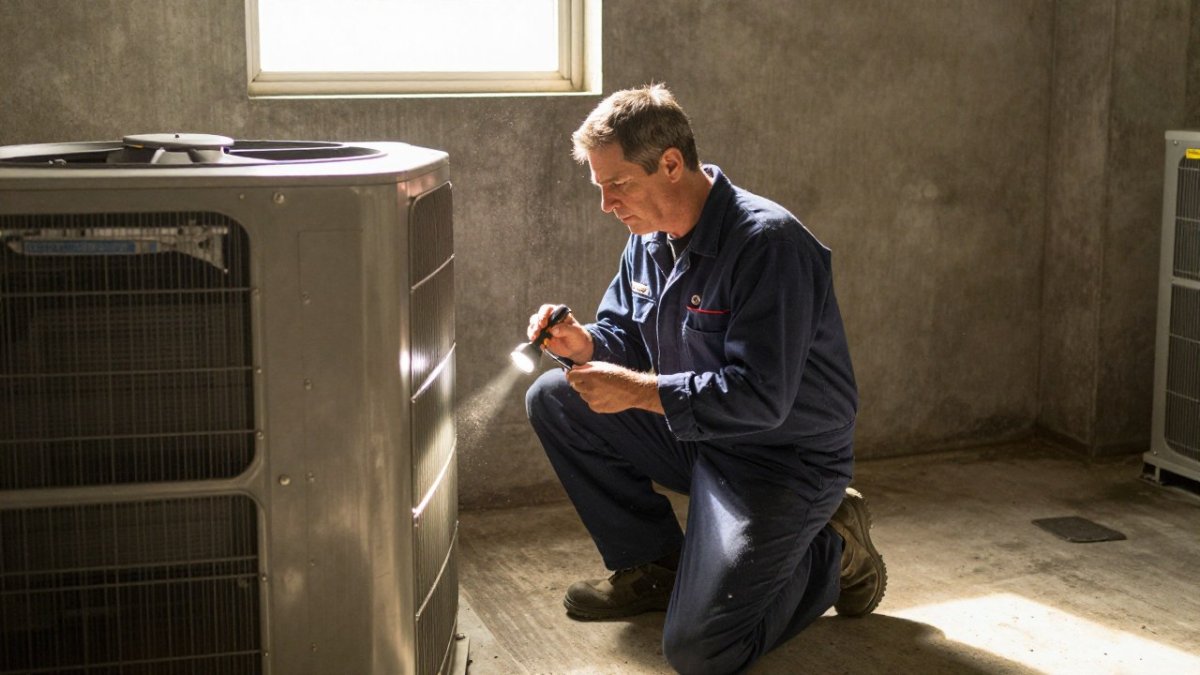
Watch out: do not open the outdoor unit or furnace cabinet to investigate a startup noise yourself.
When Your HVAC Makes Loud Noise When Starting and Stopping
If your HVAC makes loud noise when starting and stopping, the most likely culprits are loose panels, worn bearings, or a failing capacitor. These parts are involved at both the start and the stop of a cycle, so the noise shows up at both ends.
Watch for these patterns:
- A rattle at startup and shutdown often points to a loose access panel or duct connection
- A screech at both points can mean a worn blower bearing
- A click that repeats without the system starting can signal a bad capacitor or contactor
The pattern matters more than a single event. If the noise happens every cycle, it is not random. Write down what you hear and when, because that record helps a technician find the fault faster.
Why Your Furnace Is Making Loud Noise at Startup
A furnace making loud noise at startup is often a sign of delayed ignition. That means gas is building up before it lights, and when it finally catches, you hear a bang or a boom.
A small click or thump at furnace startup is usually normal. A loud bang is different. Delayed ignition can stress the heat exchanger and, in the worst case, create a safety hazard.
For a deeper breakdown of the specific causes and simple checks you can do yourself, see our guide on why your HVAC makes noise when starting.
AC Capacitor Symptoms and Other Electrical Causes of Loud Startup
AC capacitor symptoms often show up as a system that hums but will not start, a compressor that strains, or a loud buzzing at the outdoor unit. The capacitor gives the motor the jolt it needs to start. When it fails, the motor struggles.
Common electrical causes of a loud startup include:
- A weak or failed capacitor
- A pitted or stuck contactor
- Loose wiring at the disconnect
- A breaker that trips when the system starts
A loud, angry buzzing from the outdoor unit is a red flag. It can point to electrical failure in the contactor or compressor. Do not keep resetting the breaker to "see if it works." If a breaker trips at startup, the system is telling you something is wrong.
HVAC Vibration Noise: Loose Parts and Mechanical Failure
HVAC vibration noise usually comes from loose components or a mechanical failure that is getting worse. A little vibration is normal. Vibration you can feel through the floor is not.
Check these first:
- Loose access panels and screws
- A fan blade that is out of balance
- Worn motor mounts
- Debris or a bent blade in the outdoor unit
If the vibration started suddenly, suspect a loose part or something caught in the fan. If it built up slowly, suspect wear. Either way, a grinding or rough noise that keeps up is a sign of mechanical failure and needs an inspection before it turns into a bigger repair.
Safety Steps Before Help Arrives and How to Document an Intermittent Noise
Safety first: if you smell gas, leave the house and call your gas provider from outside. For other loud startup noises, turn the system off at the thermostat and, if you can reach it safely, at the breaker. Do not open panels or poke around inside the unit.
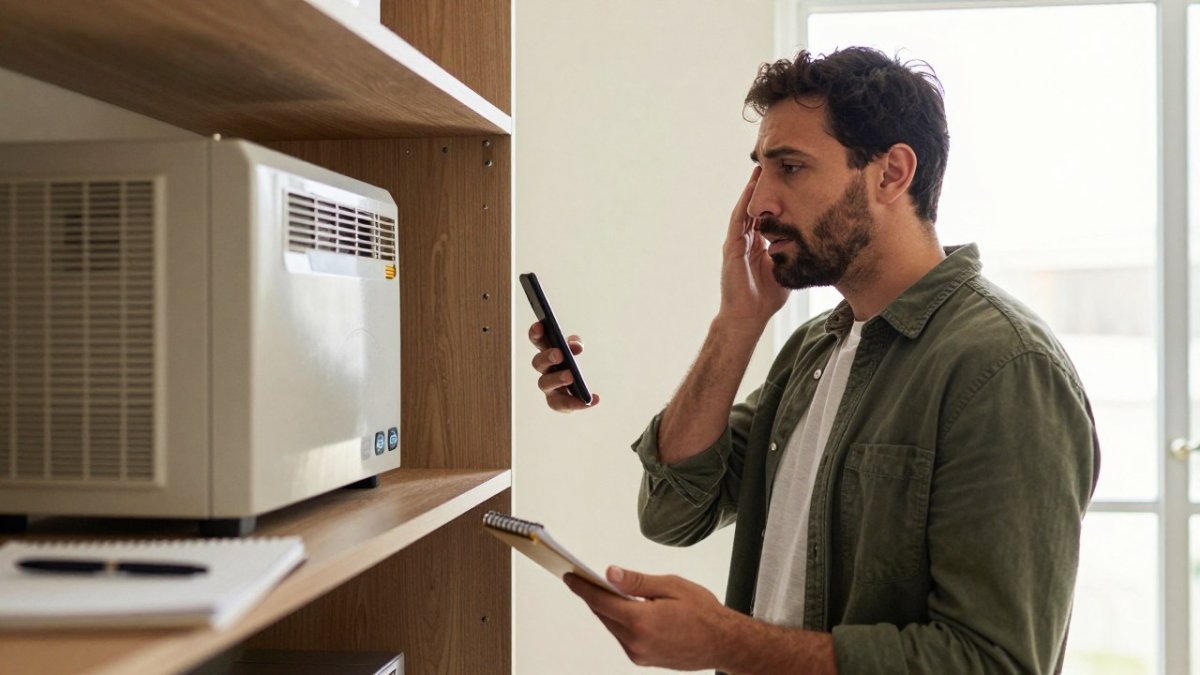
For an intermittent noise, documentation is your best tool. Do this:
- Record a short video with sound when the noise happens
- Note the time of day and the outdoor temperature
- Write down whether the system was heating or cooling
- Note how long the noise lasts and whether it repeats
If you are facing a possible emergency and want a clear plan to follow while you wait for help, our guide on handling home repair emergencies without panic gives you a simple triage system and hazard-specific steps. It is worth reading before the next scare.
What to Expect From Emergency Service and How Urgency Affects Cost
Urgency can affect the service call rate, since after-hours and weekend visits may be billed differently from a scheduled appointment.
Here is how the process typically works when you call for emergency HVAC service:
- Dispatch and triage. The dispatcher asks what you heard, whether the system is heating or cooling, and whether there is any smell, smoke, or tripped breaker. Answer honestly; it helps determine how quickly a visit is needed.
- Diagnosis on site. The technician confirms the cause and explains the repair options before work begins.
- Repair versus replace decision. If the fault is a capacitor, contactor, or loose component, the repair is often straightforward. If the compressor or heat exchanger is involved, replacement may be recommended, and a second opinion is reasonable if you are unsure.
When you call, have this ready:
- The sound you heard and when it happens (startup, shutdown, or continuous)
- Whether the system is heating or cooling
- Any smell, tripped breaker, or error code on the thermostat
- The make, model, and age of the system if you know it
- Whether the noise is intermittent and how often it repeats
If you want to avoid these reactive, higher-cost repairs in the first place, our guide on avoiding costly emergency home repairs lays out a seven-step plan to catch problems early.
At Lone Eagle Home Services, our members get priority scheduling and flat-rate pricing. You can also read more on when to call a professional for home repairs if you are weighing a DIY check against a service call.
For homeowners who want one trusted team for seasonal tune-ups and on-demand repairs, our home maintenance plans for Morris County homes cover proactive care with flat-rate pricing and confirmed appointments.
A loud noise at startup is your system's way of asking for attention, and the smart move is to act before it becomes an emergency.
Frequently Asked Questions
Is it normal for my HVAC to make noise when it starts?
A small click or a soft thump at startup is usually normal operation. According to HVAC guidance, a quiet click or thump when an air conditioner starts is typically nothing to worry about. What matters is the type of sound and whether it comes with other symptoms. A loud bang, grinding, or screeching is not normal and warrants investigation. If the noise is new, worsening, or paired with a burning smell or reduced airflow, treat it as a problem rather than routine operation.
Can a failing capacitor cause a loud HVAC startup?
Yes. A failing capacitor can prevent the compressor or fan motor from starting smoothly, which may produce a loud humming or buzzing as the motor struggles to turn over. Common AC capacitor symptoms include a humming sound at startup, the system failing to start, or the outdoor unit shutting off quickly after turning on. A loud, angry buzzing can also point to electrical failure in the contactor or compressor. A technician should test the capacitor and related startup components before the motor is damaged.
Should I turn off my HVAC if it is vibrating loudly?
If the vibration is strong enough to shake the unit or the surrounding floor, shut the system off at the thermostat. Loud HVAC vibration noise often points to loose parts, a failing motor mount, or an unbalanced fan, and running it can turn a small repair into a larger mechanical failure. After shutting it off, note when the vibration happens, how long it lasts, and whether it worsens. Then call an HVAC professional rather than restarting the system repeatedly.
Why does my furnace bang or rumble when it starts?
A furnace making loud noise at startup can point to delayed ignition, where gas builds up before igniting and produces a bang. One source describes delayed ignition as a serious issue that requires attention. Rumbling or banging can also come from expanding ductwork or loose components. Because a loud bang followed by normal operation can still signal a real problem, it should be inspected rather than ignored. Turn the furnace off and call a technician if the bang repeats or comes with a gas smell.