 How-to
How Do You Prevent Cracked Bathroom Tiles?
Last Updated: November 12, 2026
Quick Summary
To prevent cracked bathroom tiles, stop movement in the assembly before it starts: install an uncoupling membrane or cement backer board over wood, aim for 90% or better thinset coverage, and leave a gap at every wall and cabinet filled with flexible sealant. In showers, keep the waterproofing membrane continuous and use flexible silicone at all changes of plane instead of grout.
- Confirm the subfloor is flat within 1/8 inch over 10 feet before tiling.
- Fill the wall-to-shower-pan joint with flexible silicone sealant rated for wet areas, not grout.
- Keep drain weep holes clear of thinset and grout to avoid recurring shower floor cracks.
- A crack under about 1/16 inch that has not changed in months is typically cosmetic.
- Tap the tile with a screwdriver handle or coin; a hollow sound means the tile has lost its bond.
Table of Contents
- What Causes Hairline Cracks in Tiles
- How to Stop Floor Tiles Cracking: The Pre-Installation Checklist
- How to Prevent Bathroom Tile From Cracking in Shower Areas
- Diagnosing a Crack by Pattern and Width
- How to Fix Cracked Tile: Repair or Replace
- Prevention for Existing Tile Installations
- When to Call a Professional for Bathroom Tile Repair
- Frequently Asked Questions
What Causes Hairline Cracks in Tiles
A hairline crack in a bathroom tile is rarely a tile problem. It is almost always a movement problem underneath it. A thin line often appears along a grout joint or across a porcelain tile face after the tile has looked fine for years. Here is how to prevent cracked bathroom tiles before the first crack shows up.
Hairline cracks form when stress in the assembly exceeds what the tile can flex to absorb. That stress comes from two main sources.
Substrate Movement and Structural Flex
Substrate movement is the shifting of the surface beneath the tile. Wood-framed floors deflect slightly under load. Concrete slabs shrink as they cure. Seasonal temperature swings push walls and floors in different directions.
Tile is rigid. It does not stretch. When the surface below it moves and the tile cannot, the stress releases through the weakest point, usually a crack.
A common mistake is assuming a solid-feeling floor is a stable floor. Learn how to spot foundation cracks early with a simple inspection routine. A floor can pass the bounce test and still flex enough to crack a tile over time.
Improper Installation and Inadequate Support
Poor installation is the other half of the story. The most frequent culprits:
- Thinset spread with gaps, so the tile is only partly supported
- No uncoupling membrane over wood subfloors
- Missing or undersized expansion joints at room edges
- Tiles butted tight against walls with no perimeter gap
- Grout used where flexible caulk belongs
Each of these leaves a tile with no room to move. The crack is just the bill coming due.
How to Stop Floor Tiles Cracking: The Pre-Installation Checklist
The cheapest tile repair is the one you never need. If you are installing new tile, run through this checklist before the first tile goes down.
Subfloor Prep, Thinset Coverage and Bond Strength
A flat, stable, clean subfloor is the foundation of a crack-free floor. Use this list:
- Confirm the subfloor is flat within 1/8 inch over 10 feet
- Fix loose or squeaking floorboards before tiling
- Install a cement backer board or uncoupling membrane over wood
- Apply thinset with a full, even notch and press each tile firmly
- Aim for 90% or better thinset coverage under each tile
- Leave a gap at every wall and cabinet, then fill with flexible sealant
- Use a flexible sealant at all changes of plane, not grout
- Let the assembly cure fully before grouting
Skipping the membrane or the perimeter gap is where most floors fail. Both give the tile room to move without cracking.
How to Prevent Bathroom Tile From Cracking in Shower Areas
Showers are the hardest-working tile in the house. They take constant moisture, heat swings, and weight from people standing on them. They also sit on a different structure than the rest of the floor, which means they move differently.
Waterproofing Membranes and Movement Joints
Two details do most of the work in a shower.
Waterproofing membrane is the layer behind the tile that keeps water out of the framing. A liquid-applied or sheet membrane stops moisture intrusion that swells wood and shifts the substrate.
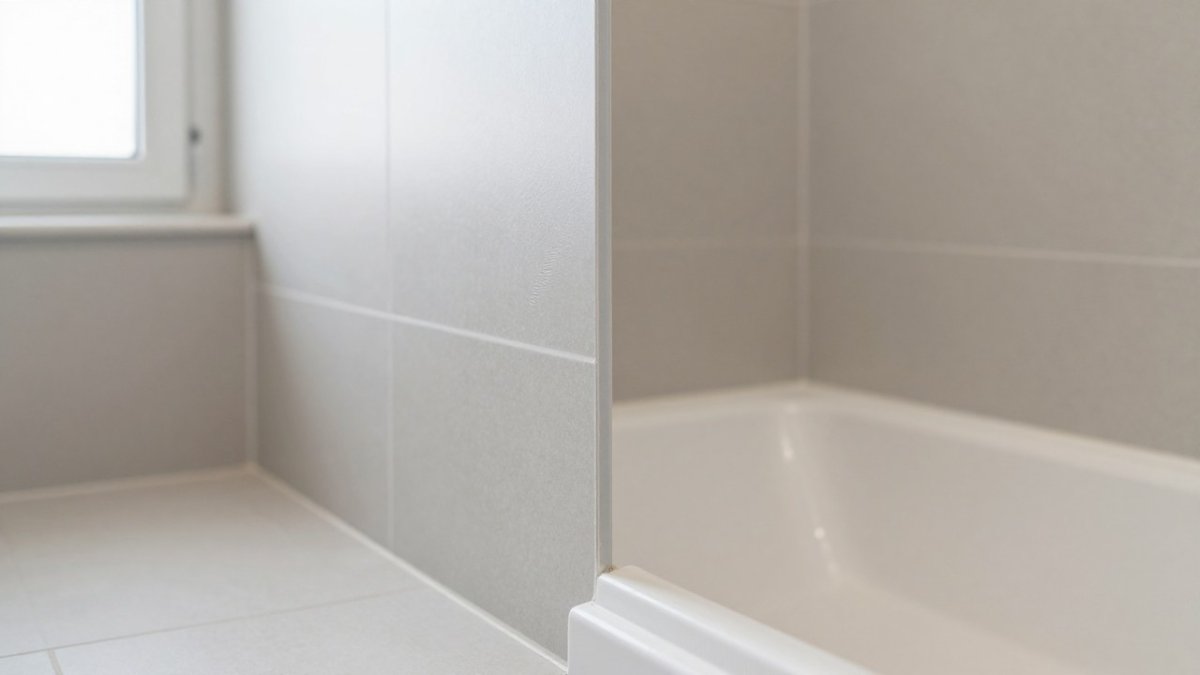
Movement joints let the shower assembly flex without cracking tile. The joint where the wall meets the shower pan is the most common failure point. Fill it with a flexible silicone sealant rated for wet areas, not grout.
Shower-Specific Details That Prevent Cracks
- Preslope under the pan liner. A shower floor needs a sloped mortar bed under the liner so water drains to the weep holes instead of pooling. A flat bed traps water, swells the substrate, and cracks tile from below.
- Weep hole protection. Keep the drain weep holes clear of thinset and grout. Clogged weep holes are a common cause of recurring shower floor cracks and efflorescence.
- Backer board joints. Tape and thinset the cement backer board joints, then apply the membrane over them. Movement at an untaped joint telegraphs through to the tile.
- Corner reinforcement. Use a flexible membrane or sealant at wall-to-wall and wall-to-floor corners rather than rigid grout.
- Curb construction. A framed or masonry curb must be solid and waterproofed before tile. A flexible curb flexes underfoot and cracks the tile on top.
Check the wall-to-pan joint once a year. If the joint traces back to plumbing, the home maintenance team Morris County homes deserve can handle the repair. If the caulk is cracked or pulling away, water gets behind the tile.
Watch out: sealing over a failed joint without removing the old caulk and drying the gap traps moisture behind the new bead and accelerates substrate damage.
Diagnosing a Crack by Pattern and Width
Not every crack means the same thing. The pattern and width tell you what is happening underneath. Most guides stop at a table; the useful step is turning that table into a decision path so you know whether to patch, monitor, or call someone.
| Crack Pattern | Likely Cause | Urgency |
|---|---|---|
| Straight hairline along a grout line | Normal movement, minor | Low |
| Crack across the tile face | Point load or impact damage | Low to moderate |
| Stair-step crack following grout lines | Substrate movement or deflection | Moderate |
| Multiple cracks radiating from one spot | Impact or hollow tile beneath | Moderate |
| Wide crack with loose or hollow tile | Structural or moisture problem | High |
Measure the Width
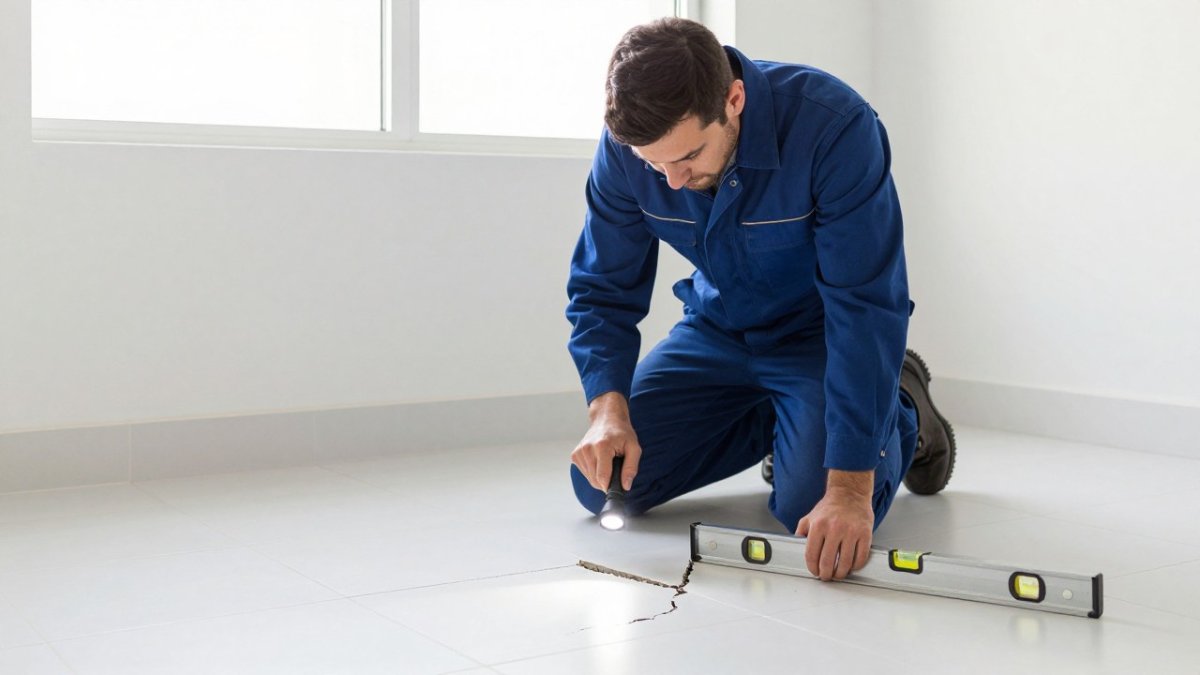
Use a simple rule for crack width. A hairline crack you can barely feel with a fingernail is usually cosmetic. A crack wide enough to catch a fingernail, or one that keeps growing, points to a deeper issue.
Tap and Listen
Tap the tile around the crack with a screwdriver handle or coin. A hollow sound means the tile has lost its bond to the substrate. That is a loose tile, and patching the surface will not fix it. Map the hollow area: a small hollow spot near one edge is different from a broad hollow across the tile center.
Follow the Decision Path
- Is the tile hollow? If yes, stop patching and plan a replacement. If no, continue.
- Is the crack wider than 1/16 inch or growing? If yes, treat it as a substrate or moisture signal and investigate before repairing. If no, continue.
- Is the crack isolated to one tile? If yes, it is likely impact damage and a patch or single-tile replacement is reasonable. If no, continue.
- Do cracks follow grout lines in a stair-step or repeat across tiles? If yes, suspect substrate movement or deflection and check for loose tiles and soft subfloor.
- Is there moisture, efflorescence, or a soft subfloor near the crack? If yes, escalate to a professional inspection before any cosmetic repair.
What Recurring Cracks Tell You
A crack that returns after patching is the clearest signal that the cause was never addressed. Recurring cracks in the same area usually mean movement, a loose tile, or moisture is still active.
Watch out: patching a hollow or moving tile hides the symptom and lets water and movement continue, which usually turns a small repair into a full replacement.
How to Fix Cracked Tile: Repair or Replace
A cracked tile can be patched or replaced, and the right call depends on why it cracked.
For a single hairline crack with solid tile underneath, a tile patch compound or color-matched epoxy can seal it. This is a temporary fix. It hides the crack, but it does not address movement.
For a loose or hollow tile, replacement is the permanent repair. The steps:
- Remove the grout around the damaged tile
- Break out the old tile without damaging neighbors
- Scrape the substrate clean and remove all debris
- Check the substrate for movement or moisture
- Set the new tile with full thinset coverage
- Grout and seal the joints
If the crack traces back to a plumbing leak or a soft subfloor, fix that first. For the drywall and paint repair that often accompanies tile fixes, see the home maintenance team Morris County homes deserve. Otherwise the new tile cracks too.
Prevention for Existing Tile Installations
You do not have to rip up a good floor to protect it. A few habits keep existing tile sound.
- Re-caulk movement joints every few years before they fail
- Seal grout lines to slow moisture intrusion
- Fix plumbing leaks fast, before water reaches the substrate
- Keep heavy furniture and point loads off tile edges
- Watch for new cracks and note if they grow
- Address hollow-sounding tiles before they loosen fully
Small problems stay small when you catch them early. Home maintenance prevents costly repairs: learn how proactive care keeps small issues from becoming expensive ones. That is the whole case for proactive home maintenance: it stops a hairline crack from becoming a full tile replacement.
When to Call a Professional for Bathroom Tile Repair
Call a pro when the crack is wide, growing, or paired with loose or hollow tile. Those signs point to substrate or moisture problems that surface patching cannot solve.
Also call when:
- Water is getting behind the tile in a shower
- The subfloor feels soft or bounces near the crack
- Cracks keep returning after you patch them
- You are unsure whether the issue is cosmetic or structural
Tile work looks simple and is not. Getting the thinset coverage, membrane, and movement joints right is what separates a repair that lasts from one that fails in a year. If you are weighing whether to hire out the job, our guide on when to call a professional for home repairs walks through the call.
A cracked tile is a small warning about a bigger system. Catch it early and you avoid water damage, loose tile, and a full replacement. Lone Eagle Home Services gives Morris County homeowners one trusted team for tile repair, plumbing coordination, and proactive seasonal tune-ups, backed by flat-rate pricing and digital service reports after every visit. Get started with Lone Eagle Home Services and keep your bathrooms dry, solid, and crack-free.
Frequently Asked Questions
What causes bathroom tiles to crack?
Most cracked bathroom tiles come from movement underneath them. Wood subfloors flex, concrete slabs shrink, and shower pans shift slightly with temperature and weight. If the tile is bonded directly to a moving surface without an uncoupling membrane or a properly prepared substrate, the stress transfers into the tile and it splits. Impact damage, inadequate thinset coverage and missing expansion joints are the other common culprits.
Can cracked bathroom tiles be repaired without replacing them?
A hairline crack that has not lifted or loosened can sometimes be filled with an epoxy or tile patch compound, which restores the surface and keeps water out of the substrate. This is a temporary fix, not a permanent repair. If the tile sounds hollow when tapped, is loose, or the crack is wider than a hairline, replacement is the better route because the bond underneath has already failed.
Can a cracked tile indicate a problem with the subfloor?
Yes. Cracks that run in a straight line across several tiles, or that reappear after a repair, usually point to movement in the subfloor or substrate rather than the tile itself. A soft or bouncy floor, a hollow sound underfoot, or grout that keeps crumbling are further signs. In those cases, fixing the tile without addressing the substrate will only produce another crack.
How do I prevent tiles from cracking in a shower?
Use a waterproofing membrane behind the tile, seal the joint where the wall meets the shower pan with a flexible silicone sealant rather than grout, and leave a small gap at the perimeter instead of tiling tight to the walls. Also make sure the shower pan is fully supported so it does not flex when someone stands on it.