 How-to
What to Look for When Hiring a Handyman for Home Repairs
Last Updated: November 8, 2026
Quick Summary
When hiring a handyman, ask about their specialty, schedule, references, and how they handle unexpected repairs, then verify licensing and insurance yourself rather than accepting promises. Get three recent references, compare written estimates line by line, and treat cash-only demands or large upfront deposits as red flags.
- Ask for three recent customers who had similar work done, then actually call them.
- Check the insurance certificate and phone the insurer to confirm the policy is active.
- Give every handyman the same written scope before they bid so estimates compare fairly.
- Agree in writing that any added work needs a written change order with a price first.
- Jobs touching gas lines, panels, or structural work need a licensed specialist, not a handyman.
Table of Contents
- Start With the Right Questions to Ask Before Hiring a Handyman
- Confirm Licensing, Insurance, and Local Requirements
- How to Check Handyman References and Past Work
- Use a Handyman Estimate Checklist to Compare Bids Fairly
- Know the Red Flags When Hiring a Handyman
- Match the Job to the Right Skill Level and Scope of Work
- See Plans and Book Your First Vetted Visit
- Frequently Asked Questions
Start With the Right Questions to Ask Before Hiring a Handyman
Most homeowners start with price. That is the wrong first move. Knowing what to look for when hiring a handyman starts with the questions you ask before anyone touches your home. Ask about their specialty, their schedule, and who shows up on the day. Ask how they handle a repair that turns out bigger than expected.
A rushed hire often means a second repair later.
Here is the short list of questions to ask before hiring a handyman:
- What kind of work do you do most often?
- Are you licensed and insured for this job?
- Can you give me three recent references?
- Will you put the scope of work in writing?
- Who handles permits if this job needs one?
- How do you charge: flat rate or hourly?
- What happens if the work fails?
Write the answers down. A vague answer is information too.
For a fuller list you can bring to the first call, see our guide to 9 questions to ask before hiring a handyman.
Confirm Licensing, Insurance, and Local Requirements
Ask for proof, not promises. Licensing and permit rules for handymen are set at the state and local level and vary by task, so the only reliable approach is to verify the rules for your address before work begins. A handyman who cannot show a certificate of insurance is a risk you carry, not them.
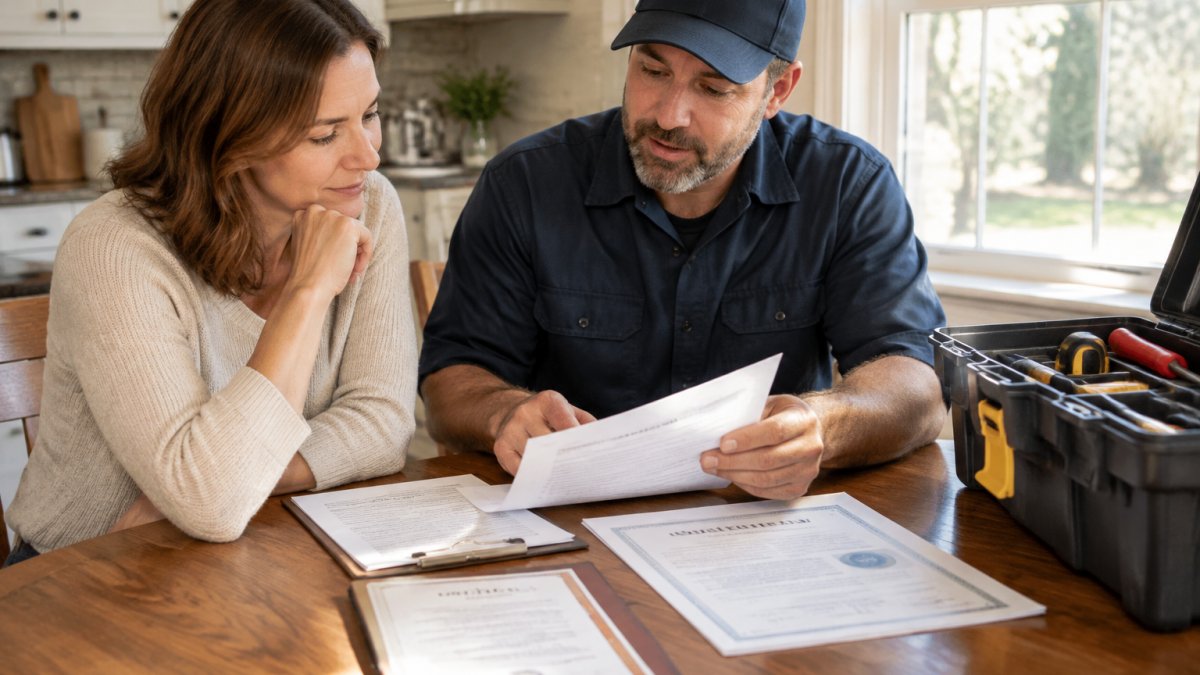
Step 1: Find out what your state and locality require. Start with your state's consumer protection or professional regulation agency and search for "home improvement contractor" or "handyman" registration. Registration and local business license requirements vary, so check with your state and local authorities. Requirements also attach to the task, so confirm with your state or local authority which work requires a licensed trade professional. Confirm both the contractor-level registration and the task-level rule before you sign anything.
Step 2: Verify the registration or license yourself. Most state registries are searchable online by business name or registration number. Match the legal business name on the registration to the name on the estimate, the name on the insurance certificate, and the name the handyman gives you. A mismatch is a question to resolve before work starts, not after. Our walkthrough on verifying home improvement licenses shows how to look up a contractor's registration, confirm its status, and match the insurance certificate to the business name.
Step 3: Read the insurance certificate, then confirm it. Ask for a certificate of insurance and check four things: the named insured matches the business, general liability coverage is active, workers' compensation coverage is listed if the handyman has employees, and the policy dates cover your project window. Then call the insurer's number on the certificate and ask whether the policy is active and whether it will remain active through your project dates. A certificate can be issued and later canceled, so the phone call is the part that actually protects you. Our article on contractor general liability insurance explains what a policy actually covers and where the gaps sit.
Step 4: Settle the permit question in writing. Some repairs require a permit, and who holds it varies by jurisdiction. Ask who pulls the permit, who pays the permit fee, and who is responsible for the inspection. Put the answer in the written scope. If a handyman asks you to pull the permit as the homeowner, treat that as a signal to verify their registration before proceeding.
Watch out: a registration number that looks valid on paper can belong to a different business entity, so confirm the name and address match across the registry, the certificate of insurance, and the contract before any deposit changes hands.
How to Check Handyman References and Past Work
References are only useful if you actually call them. Ask for three recent customers who had similar work done. Then ask those customers four things: did the handyman show up on time, did the final cost match the written estimate, did the work hold up, and would they hire again.
Reviews help, but read the middle ones. Five-star and one-star reviews tell you little. The three-star reviews usually describe the real experience.
Past work matters more than a photo gallery. Ask to see a job like yours, or ask for the address of a recent project you can drive past. A confident handyman will point you to real work.
For a broader walkthrough of vetting local trades, read how to find reliable local handyman services.
Use a Handyman Estimate Checklist to Compare Bids Fairly
Two estimates rarely look alike, so compare them line by line. A handyman estimate checklist turns a vague quote into something you can check. The lowest number is often not the lowest cost.
The fair-comparison method is to give every handyman the same written scope before they bid. Write down what gets fixed, what materials get used, and what counts as done, then ask each one to price that identical scope. Bids on different scopes cannot be compared, no matter how carefully you read them.
| What to Compare | Why It Matters | Warning Sign |
|---|---|---|
| Scope of work | Defines exactly what gets done | Vague wording like "fix area" |
| Labor vs. materials | Shows where the money goes | One lump sum, no breakdown |
| Disposal and cleanup | Often excluded from the base price | "Haul-away extra" buried in fine print |
| Payment schedule | Protects you as work progresses | Large deposit up front |
| Timeline | Sets a realistic schedule | No dates at all |
| Permit responsibility | Assigns legal duty | "You handle the permit" |
| Warranty on workmanship | Covers you after the job | No warranty offered |
| Change order process | Controls cost creep | Verbal changes only |
Compare the line items, not the totals. Check that every bid prices the same labor, the same materials, and the same disposal. If one bid is far below the others, ask what is missing, because something usually is, often permit fees, haul-away, or prep work. If one bid is far above, ask what it includes that the others do not.
Protect your payments. A common pattern is a modest deposit to schedule the work, with the balance tied to milestones or completion. Be cautious of any request for full payment before satisfactory completion, and get a receipt for every payment. Keep the payment schedule in the written agreement so there is no dispute later about what was owed when.
Agree on change orders in advance. The "while you're here" request is the most common source of cost creep. Agree in writing that any added work requires a written change order with a price before it starts. Verbal changes are hard to enforce and easy to dispute.
Cover the after-the-job terms. Ask what warranty or correction policy applies to workmanship, how long it lasts, and how to request a correction. Ask about cancellation terms if the schedule slips. These terms cost nothing to negotiate before the job and are nearly impossible to add afterward.
Know your dispute path. If work is incomplete or defective, the written scope, the change orders, the receipts, and the warranty terms are your evidence. Agree beforehand on how disputes get raised and resolved, and keep the paper trail in one place.
Watch out: a bid that looks complete can still exclude permit fees, disposal, or prep work, so read the exclusions line before you compare totals.
Know the Red Flags When Hiring a Handyman
Trust your gut, but back it with facts. The clearest red flags when hiring a handyman are easy to spot once you know them. Watch for these:
- Cash only, no receipt. You lose your paper trail.
- Big deposit demanded. A large up-front payment shifts all the risk to you.
- No written agreement. Verbal deals are hard to enforce.
- Pressure to decide today. Real pros can wait a day.
- No physical address or business name. Hard to trace if something goes wrong.
- Reluctance to show insurance. A common sign the policy does not exist.
Watch out: a handyman who asks you to pull the permit is often unregistered. That puts the liability on your property record, not theirs.
Match the Job to the Right Skill Level and Scope of Work
Not every job suits a handyman. Small repairs, patching, caulking, door adjustments, and seasonal tune-ups fit the generalist skill set. Gas lines, panel upgrades, structural work, and major plumbing need a licensed specialist in that trade.
Define the scope of work before you hire. Write down what gets fixed, what materials get used, and what counts as done. A clear scope protects both sides and stops the "while you're here" creep that inflates the bill.
A good rule: if the job touches a system that can hurt someone or flood the house, hire the licensed trade. If it is cosmetic or minor, a handyman is the right call.
See Plans and Book Your First Vetted Visit
Juggling several contractors is the real cost of home repairs. One call for the door, another for the gutter, a third for the seasonal tune-up. That is the problem a membership model solves. Lone Eagle Home Services gives you one trusted team for maintenance and vendor coordination, with flat-rate pricing and confirmed appointments.
Members get proactive seasonal tune-ups, priority scheduling, and a digital service report after every visit. Uniformed technicians and accountability replace the guesswork.
Ready to stop chasing contractors? Learn how to book professional home maintenance and schedule your first vetted visit.
Hiring well takes a few checks: questions, credentials, references, and a written estimate. If you would rather hand that work to one accountable team, Lone Eagle Home Services runs proactive seasonal tune-ups, on-demand repairs, and vendor coordination under flat-rate pricing. Get started with Lone Eagle Home Services and keep your home cared for before small problems grow.
Frequently Asked Questions
What are some red flags when hiring a handyman?
Watch for anyone who demands full payment upfront, refuses to put the scope of work in writing, or cannot show proof of liability insurance and workers' compensation. Be cautious of a handyman who pressures you to skip a permit for work that clearly needs one, gives only a verbal estimate, or has no verifiable references. Vague answers about licensing, no fixed business address, and unwillingness to provide a written agreement are all reasons to walk away and keep looking.
Should a handyman be licensed and insured?
Insurance is essential in every case, and licensing depends on your state and local rules. Ask for a certificate of liability insurance and confirm workers' compensation coverage before work begins, then verify the policy is current with the insurer. For tasks like electrical, plumbing, or structural work, licensing requirements may apply, so check with your state and local authorities. Confirm what your local requirements are for the specific job, and get the details in writing.
What should a handyman's written estimate include?
A solid estimate lists the full scope of work, labor and materials broken out separately, the total cost, the payment schedule, and the expected timeline. It should name who pulls any required permits, what warranty covers workmanship, and how change orders are handled if the job expands. Use a handyman estimate checklist to compare bids line by line rather than on the bottom-line number alone, since a low total often hides excluded materials or added trip charges.
How do I check a handyman's references and reviews?
Ask for two or three references from jobs similar to yours and call them, asking specifically about punctuality, cleanup, and whether the work held up months later. Cross-check online reviews across more than one platform and read the negative ones for patterns rather than one-off complaints. When hiring a handyman for recurring maintenance, ask whether past clients would hire them again. Consistent, specific feedback across references and reviews is a stronger signal than a single glowing testimonial.